


When Every Healthy Habit Stops Working
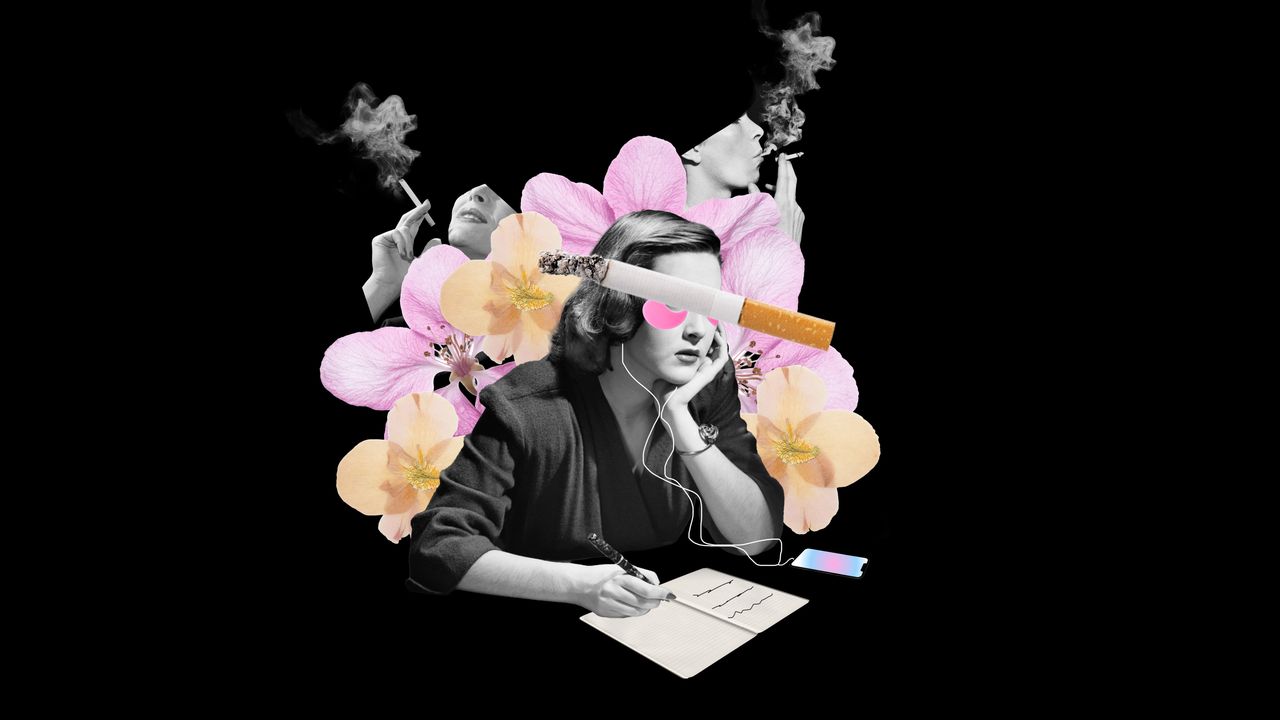
There is a particular kind of exhaustion that no serum, no adaptogen latte, no breathwork session can touch. It settles into the skin, hollows out the eyes, and sits there. A health reporter – someone whose entire professional life is built around knowing better – is publicly wrestling with the idea of smoking again, not out of ignorance, but out of desperation. The reason she gives is stress, and the economy behind it.
She has tried everything else.
That sentence carries a lot of weight in beauty and wellness circles, where “everything else” can mean years of accumulated routines, supplements, therapy, and the quiet discipline of someone who writes about health for a living. And still, she is here, reconsidering a habit she once quit, because the pressure of surviving financially in this moment has outpaced every tool she has built to manage it. The skin and body consequences of smoking are well-documented – accelerated collagen breakdown, compromised circulation, dullness that no brightening treatment fully reverses – and she knows all of it. That is precisely what makes her admission so striking.
The Stress-Skin Connection Nobody Wants to Talk About Honestly
Beauty editors spend considerable energy explaining what chronic stress does to the body’s surface. Cortisol spikes disrupt the skin barrier, slow cell turnover, trigger inflammation, and worsen conditions like acne, eczema, and rosacea. Stress is treated as a variable to be managed, neutralized, optimized away through the right protocol. What rarely gets addressed is what happens when the source of stress is structural – when it is not a bad week but an ongoing economic reality that does not respond to magnesium glycinate or a cold plunge.
The reporter’s position is uncomfortable specifically because she represents a version of informed self-care that has hit a ceiling. She is not someone who neglected her wellness. She is someone who invested in it, learned the science, applied it diligently, and found that the math still does not add up when financial anxiety is the underlying variable. Smoking, historically, has functioned as a stress-relief mechanism not because it is chemically effective at reducing cortisol – nicotine actually raises heart rate and blood pressure acutely – but because it imposes a ritual pause, a socially accepted reason to step outside and breathe.
That ritual is what the beauty and wellness industry has been trying to replicate for decades. The facial massage that forces you to slow down. The ten-step routine that structures the morning. The bath soak that creates a container around the end of the day. These are all, at their core, attempts to manufacture the cigarette break without the cigarette. The reporter’s contemplation suggests that for some people, in some economic conditions, the substitutes are not landing with the same weight.
What the Skin Actually Pays When Stress Wins
From a purely skin-focused lens, returning to smoking would mean trading one visible damage source for another. Chronic stress already does measurable harm – it shortens telomeres, impairs wound healing, and creates the kind of persistent low-grade inflammation that shows up as premature lines, uneven texture, and a general flatness of complexion that no highlighter fully corrects. Smoking layers on top of that: the repeated muscle contractions around the mouth, the reduced oxygen delivery to skin cells, the free radical load that overwhelms antioxidant defenses.
Nicotine constricts blood vessels, which means less of the nutrient-rich blood flow that keeps skin looking alive. Collagen and elastin degrade faster. Wound healing slows. Dermatologists consistently identify smokers’ skin by a specific combination of grayish tone and fine surface dehydration that sits differently from sun damage. Products can address some of these effects at the surface, but the underlying mechanism keeps running. Keeping pores clear and the barrier intact becomes significantly harder when the circulatory system is working against you.
And yet. None of that is new information to the reporter writing this piece. The reason her story resonates – and it is resonating, because it is being widely read and shared – is that it names something the wellness industry consistently sidesteps: there is a version of stress that is not a lifestyle problem. It is an economic one. And the body does not wait for the economy to improve before it starts keeping score.
The Gap Between Knowing and Doing
What her piece ultimately exposes is a quiet fracture inside health and beauty culture – the assumption that information plus intention equals behavior change. It is a fracture that practitioners and editors in this space mostly prefer not to examine too directly, because the entire architecture of wellness content depends on the premise that knowing better leads to doing better. This reporter knows better. She wrote the articles. She still finds herself weighing the cigarette.
The economy she references is not abstract. Financial stress is one of the most persistent drivers of poor health outcomes across every metric that researchers track – sleep quality, inflammatory markers, mental health, cardiovascular risk. It compresses decision-making bandwidth, which is why people under financial pressure frequently make choices that look, from the outside, counterproductive. It is not that they do not know. It is that knowing requires cognitive and emotional resources, and those resources are being spent elsewhere, on rent, on debt, on the calculation of whether the numbers will work out this month.
For the beauty industry, which sells hope in small bottles at a range of price points, this is an uncomfortable mirror. Stress is good for business – it creates demand for calming, correcting, and restoring. But the category of stress that this reporter is describing does not have a product answer. It does not resolve with a better nighttime routine or a more consistent SPF habit, though both remain worth having. It resolves, if it resolves, with the external conditions that created it changing.
She has not lit the cigarette yet. That detail is still open.