



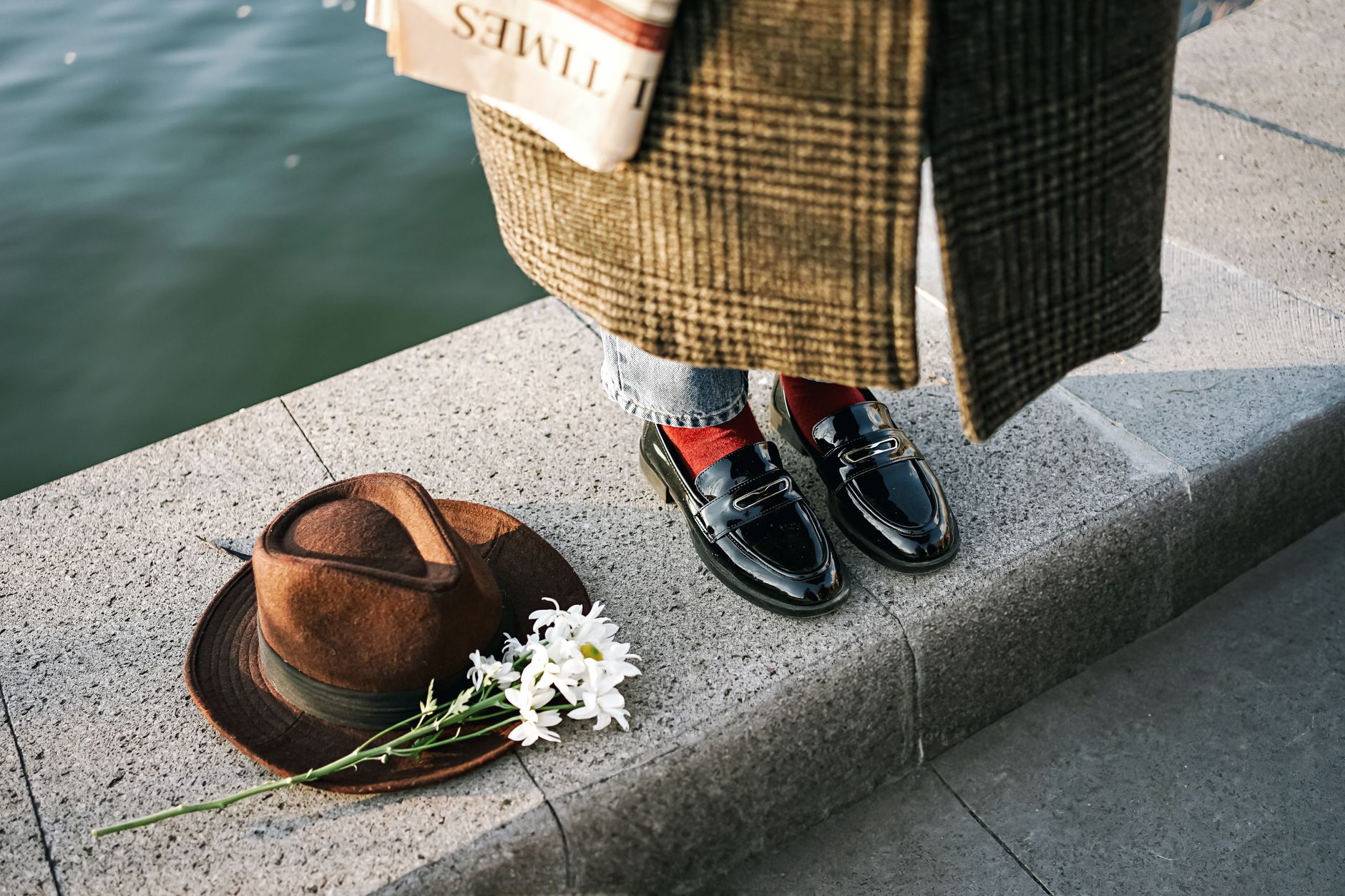
Queen Letizia of Spain visited a Madrid artistic residency in an outfit that kept almost everything quiet. She wore a form-fitted blazer over a white shirt, a combination so familiar it barely registers as a choice. The one loud element sat at the floor: a pair of Massimo Dutti derby loafers embellished with kilty fringe.
The overall effect was relaxed sophistication, polished enough for a royal engagement and loose enough for a room full of working artists. Most of that balance came from the footwear.

A Uniform With One Moving Part
Blazer and white shirt is about as close to a fashion default as tailoring gets. It has no seasonal trend attached and no obvious era, and it works in a boardroom, a gallery or a studio. That reliability is also its weakness, because worn without a deliberate twist it can look like a decision nobody made.
Letizia’s twist was practical and small. The fitted cut of the blazer kept the upper half crisp and structured, so the lower half had room to be playful. Instead of a plain pump or a sleek ankle boot, she chose a shoe with texture and a bit of history, and the outfit stopped reading as formula and started reading as styling.
What Kilty Fringe Actually Does
Kilty fringe is the tongue of leather, cut into a decorative fringe, that folds over the front of a shoe’s laces or vamp. It began as a detail on traditional brogue-style footwear and has since drifted into loafers and other casual shapes. Its job is mostly visual: it adds movement and a break in what would otherwise be a smooth expanse of leather across the top of the foot.
On a derby loafer, the detail matters even more. The name borrows from two traditions, the lace-up derby with its open, relaxed construction and the slip-on ease of a loafer. Both are shoes that signal comfort first. Adding fringe pushes the pair toward the preppy, collegiate end of the spectrum, which is a long way from the glossy formality of a royal heel.
Against a form-fitted blazer, that contrast is useful. Sharp tailoring tends to look severe when everything beneath it is equally sleek. A flat, textured shoe takes the edge off without undermining the structure above, and the white shirt acts as a clean divider between the two ideas.
The setting also shapes how the outfit reads. An artistic residency is a place where people make things, and a stiff, ceremonial look would feel out of step there. A flat shoe you can walk through a studio in, topped with a jacket that still signals respect for the occasion, solves that without much fuss.
A Spanish Label for a Madrid Appearance
The shoes came from Massimo Dutti, a Spanish brand, which makes the choice neat for an engagement in Madrid. It is a mainstream retail label rather than an atelier, and a queen wearing it sends a different message than a custom piece would. The look says the clothes are meant to be worn, not admired from a distance.
That matters for how the outfit travels. A bespoke garment is something readers can only look at, while a loafer from a high-street Spanish label is something they can actually go and find. The styling does the aspirational work, and the product stays within reach.
Borrowing the Formula
The look is easy to adapt because each piece plays a clear role. The blazer provides shape, the white shirt provides clarity, and the loafer provides personality. If you swap in a louder shoe, the jacket and shirt can stay exactly as they are.
A few things keep the formula from going wrong:
- Keep the tailoring close to the body. A fitted blazer gives the fringe something to contrast with, while a boxy one competes with it.
- Leave the shirt plain. The white shirt works as negative space, and any pattern would crowd the shoe.
- Let the shoe be the only decorative detail. Heavy jewelry or a busy bag would pull attention away from the fringe.
That restraint is what makes the outfit work. Everything above the ankle stays still, and the fringe is the only part of the look built to swing a little with each step.