




A Designer Who Never Chased Relevance Now Has It
Hussein Chalayan spent decades building one of fashion’s most intellectually rigorous bodies of work – dresses that disintegrated, garments that transformed on the body, collections that interrogated identity, displacement, and time. Now, a generation that wasn’t alive for those original shows is treating him as a primary source.
The Olivia Rodrigo Moment and What It Revealed
When Olivia Rodrigo wore a Chalayan piece – a disintegrating dress – it landed with the kind of cultural force that money can’t manufacture. For younger audiences encountering the image on social media, it read as something startlingly new. For anyone who had followed Chalayan’s work across the late 1990s and 2000s, it was an encounter with an archive that had been quietly sitting there, waiting. The dress wasn’t a costume choice made to signal obscure taste. It was a piece with its own intellectual history, pulled back into circulation by a pop star with 30 million followers and an instinct for visual provocation.
Chalayan has spoken about how it feels to watch that happen – not with bitterness at the gap between original reception and current enthusiasm, but with something closer to curiosity. His work was never designed to expire. The ideas embedded in pieces about erosion, decay, and transformation were always durable because they weren’t trend-dependent. A dress that literally falls apart is making an argument about impermanence that doesn’t need a runway season to stay legible.
What the Rodrigo moment confirmed is that fashion’s relationship with its own archive is changing. References that once required institutional knowledge to decode are now accessible through a single image shared at scale. Chalayan’s specific aesthetic vocabulary – conceptual, technically complex, loaded with references to geography and cultural identity – translates visually even when the theoretical scaffolding isn’t attached. The dress communicates before the explanation arrives.
That accessibility hasn’t flattened the work. If anything, it has sent people backward into the archive with genuine interest rather than superficial sampling. Chalayan’s early graduate work from Central Saint Martins, where he buried garments in his roommate’s garden with his own letters before digging them up to show their transformation, is now circulating again as context. The story of those original pieces – stained, degraded, and yet fully intentional – is part of what makes the current rediscovery feel substantive rather than cyclical.
The Acne Studios Collaboration and the Question of Context
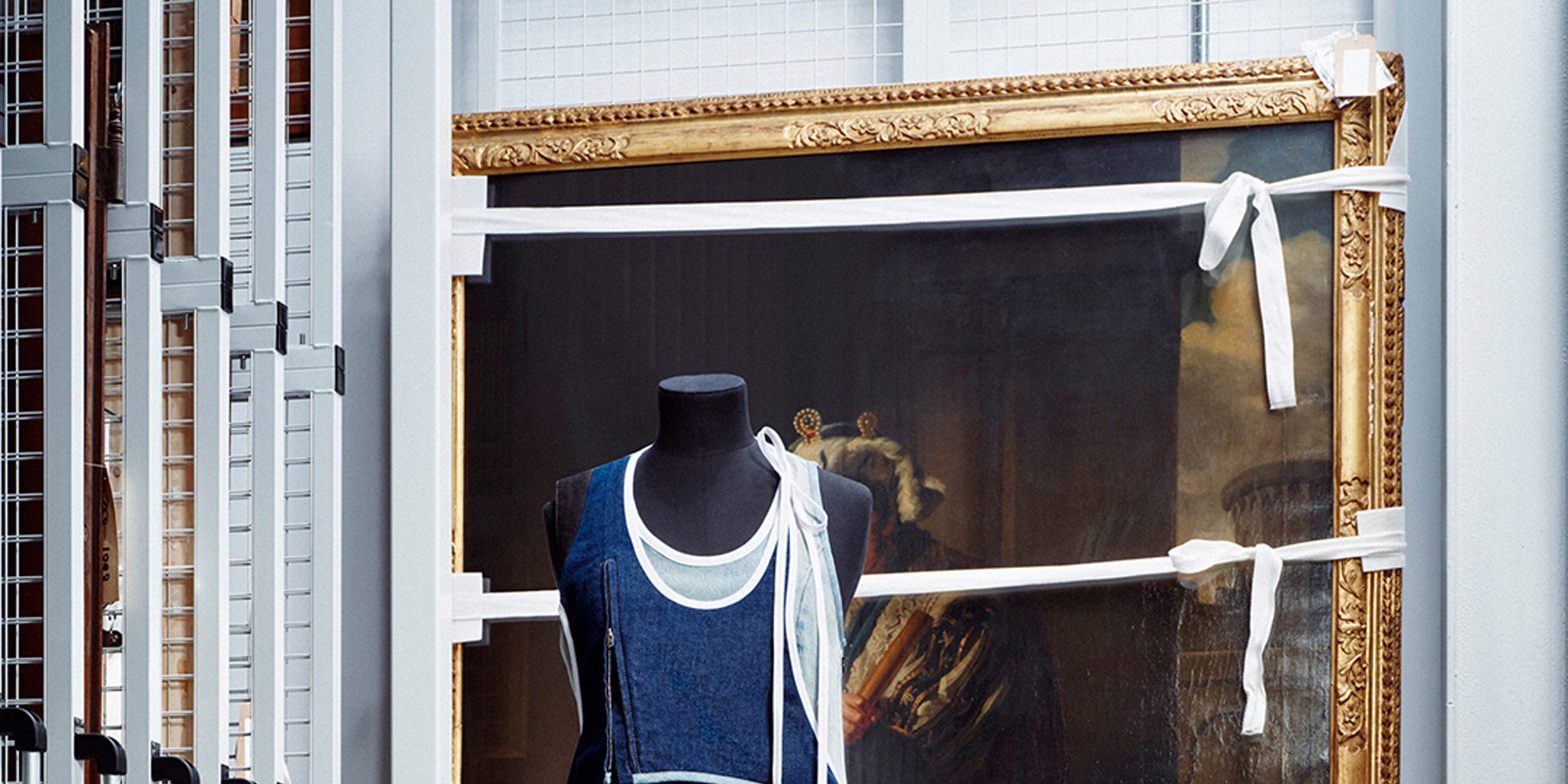
Chalayan’s collaboration with Acne Studios arrived at a particular moment – when his profile among younger consumers was already climbing and the fashion conversation around archival work was louder than it had been in years. Acne, as a brand, has its own precise aesthetic identity: a kind of considered Scandinavian intellectualism that sits close enough to Chalayan’s sensibility to make the pairing feel structural rather than opportunistic. Both operate in the space between wearability and concept without fully committing to either pole.
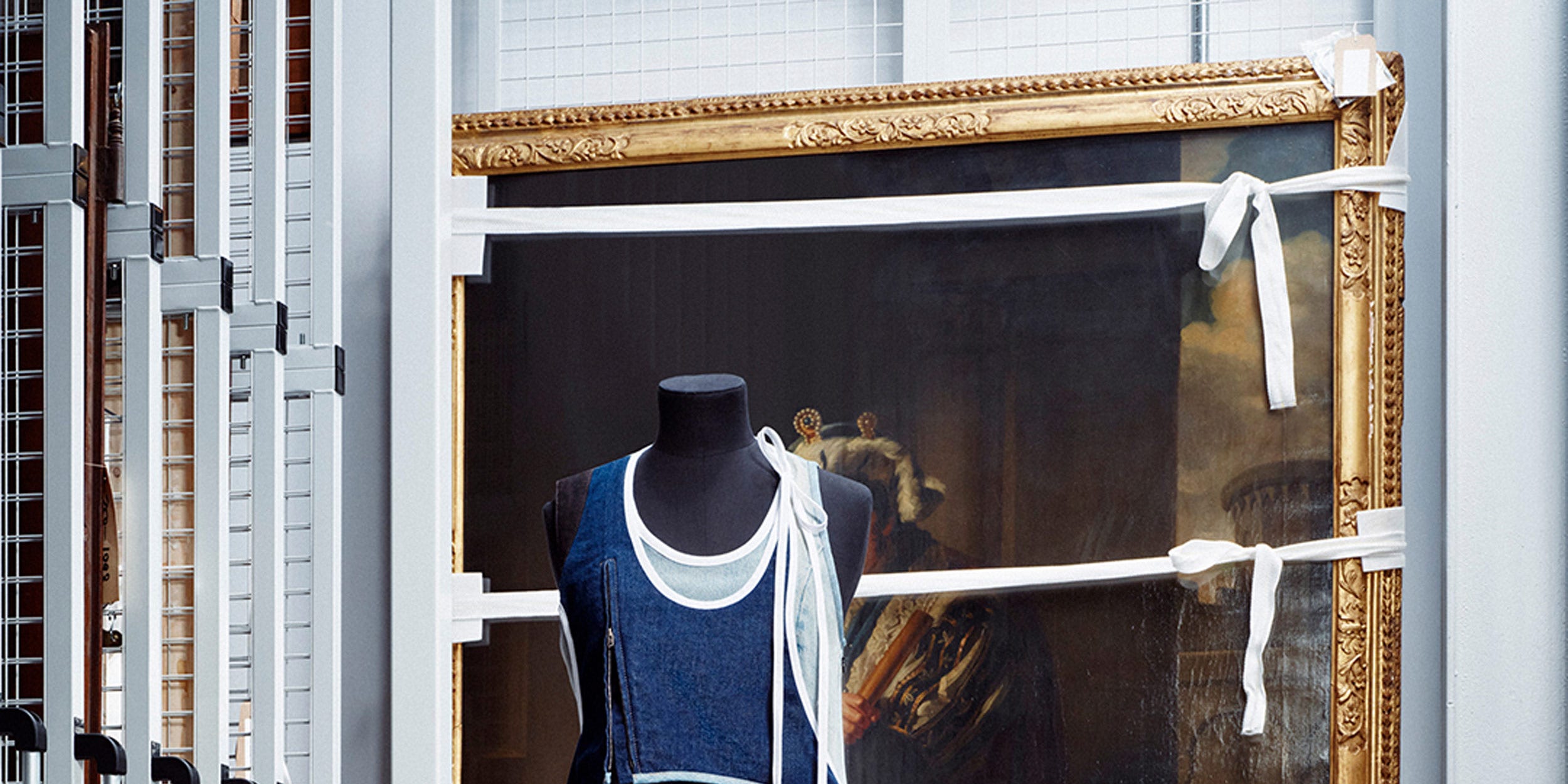
The collaboration gave Chalayan’s ideas a distribution channel that his own label, operating at a different scale, couldn’t replicate. Acne’s retail footprint and its existing audience of design-literate consumers created a context in which Chalayan’s conceptual instincts could be introduced without requiring a primer. The pieces didn’t need to announce their origin in fashion theory to land. They carried the DNA of his practice – the attention to silhouette, the interest in what garments do rather than simply what they look like – in a form that moved through a commercial framework.
What’s worth noting is what the collaboration didn’t do. It didn’t soften Chalayan into something broadly palatable by stripping out the intellectual content. The tension that has always defined his work – between garment as object and garment as idea – remained present. That’s a relatively rare outcome for collaborations between independent designers with strong conceptual identities and larger commercial houses, where the tendency is to retain the name and dilute everything underneath it.
Chalayan has talked about how collaboration functions differently when both parties are genuinely interested in the outcome rather than the marketing event. With Acne, the process involved real dialogue about what the work could be rather than a licensing arrangement dressed up as creative exchange. That kind of engagement is harder to find as collaborative fashion has become a standard promotional tool rather than an exception.
The timing also matters. Chalayan entering a broader conversation through Acne while simultaneously being rediscovered by a younger generation through the Rodrigo moment created a double exposure. His name appeared in two different registers almost simultaneously – as a reference point for a pop cultural image and as a collaborator on current product. That’s an unusual convergence, and it means his work is being encountered now from multiple directions at once, by audiences with very different entry points.
For someone whose career has never followed a conventional commercial trajectory, the current visibility raises a specific kind of question about what comes next. Chalayan’s label has operated through periods of significant attention and periods of near-invisibility, and he has been candid about the financial difficulty of sustaining a conceptually driven practice in a market built around seasonal consistency and scalable production. The current moment doesn’t automatically resolve those structural tensions. Visibility and financial stability are not the same thing, and a designer becoming a reference point for a new generation doesn’t translate directly into a runway show budget.
What It Means to Become a Touchpoint
There’s something specific about being described as a “reference” rather than an influence. An influence implies that other designers are borrowing from your vocabulary. A reference implies that a broader cultural conversation is using your work to locate itself – to mark a point on a map and say, this is where certain ideas about clothing and the body were being pushed furthest. Chalayan, at this moment, is functioning as that second thing. His work is being used to calibrate what ambition in fashion can look like.
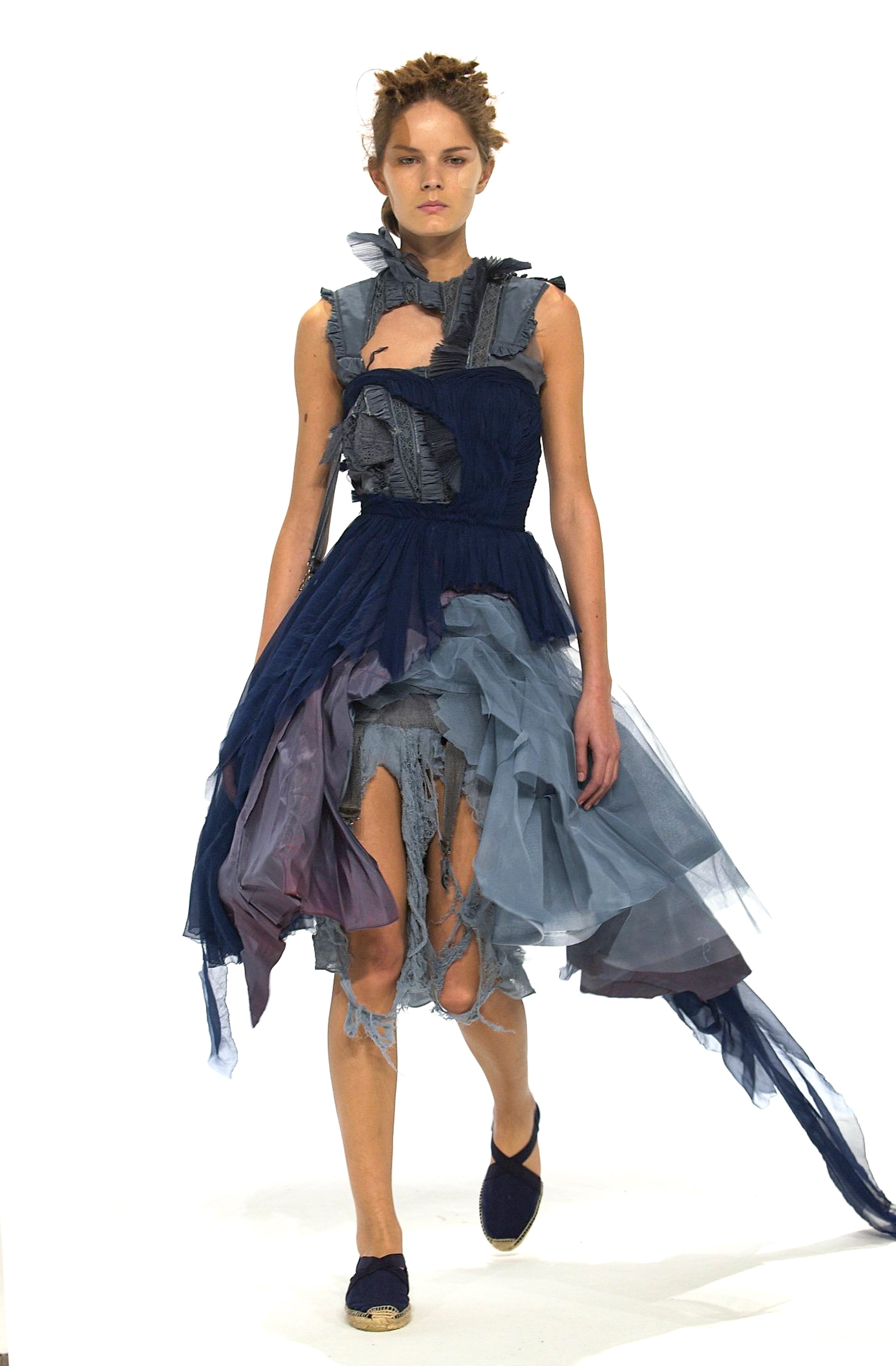
He has noted that the generation now treating him as a touchstone is encountering the work without the original critical apparatus around it – without the reviews, the runway context, the industry debates of the late 1990s and early 2000s that shaped how the pieces were initially received. They are coming to it clean, which means they are reading it on its own terms rather than through layers of received opinion. Whether that produces a more accurate understanding of what the work was doing, or simply a different misreading than the one his original audience performed, is a question that doesn’t have a clean answer. Fashion’s relationship with its own history is always partial, always filtered through whoever is doing the looking. What remains undeniable is that a dress buried in a garden in 1993 is somehow, in 2024, still generating new conversations – and Chalayan is in the room for all of them.