


The Office Wears Satin Now
Fall 2026 is dismantling the unspoken rules that have governed getting dressed for decades – satin belongs at the desk, plaid belongs at the cocktail party, and the old context-to-fabric logic has been retired entirely.
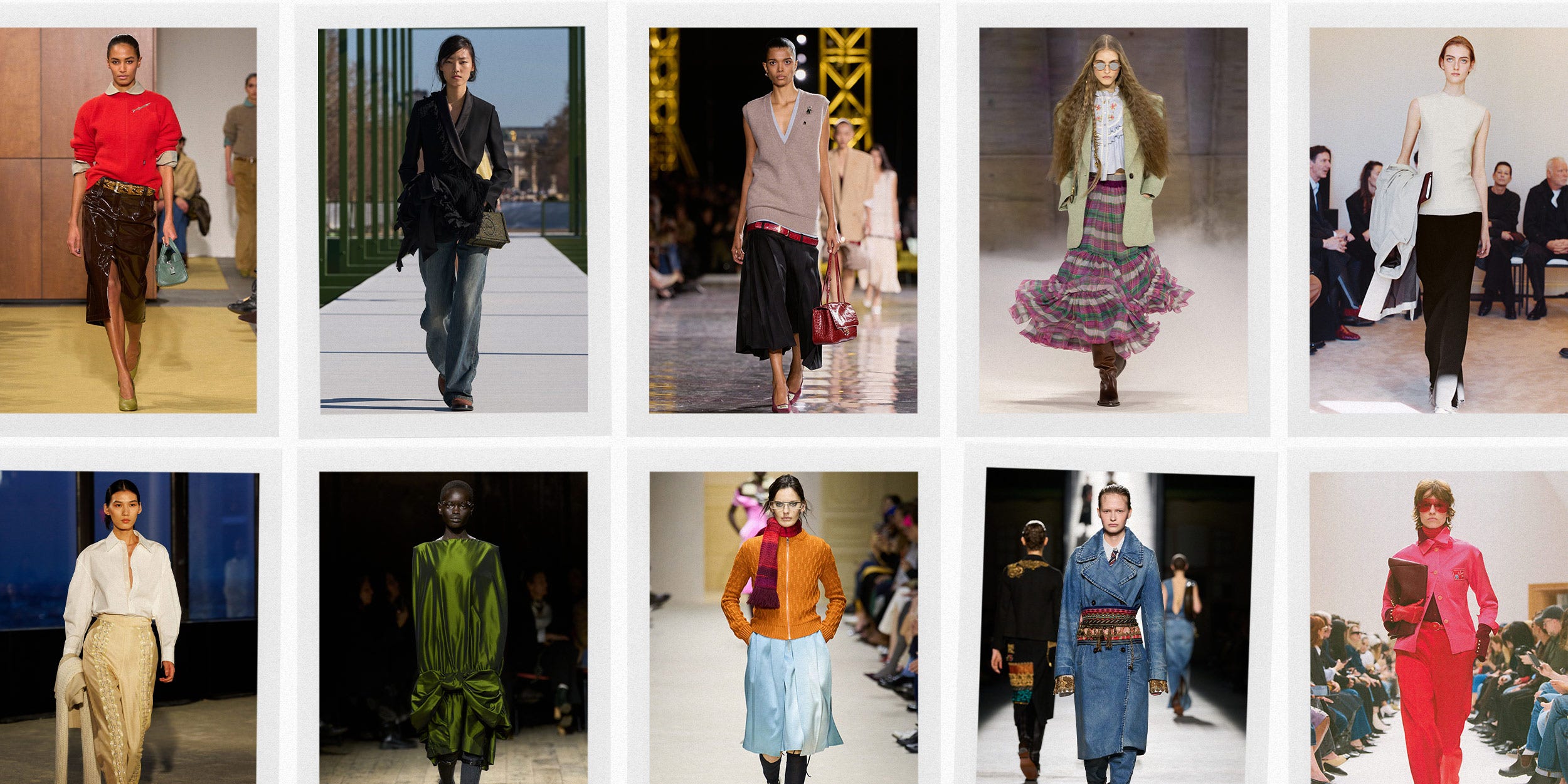
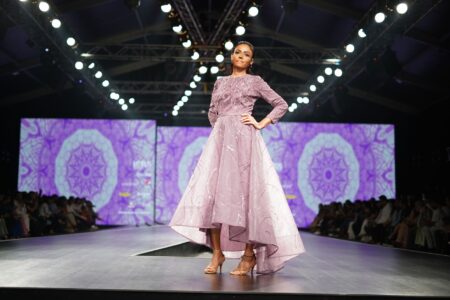
For most of recent fashion memory, satin was the fabric you reserved for evenings out – something slippery and light-catching that announced you were going somewhere worth dressing for. That agreement is being broken this fall. Satin blouses, satin trousers, and satin midi skirts are showing up in workwear contexts, styled with the same straightforward intention that a crisp cotton shirt once carried. The appeal is partly tactile – satin moves differently, reflects light differently – and partly a deliberate refusal to keep luxurious fabrics locked behind a specific hour of the day.
What makes this shift feel less like a stunt and more like an actual wardrobe evolution is how functional the styling has become. This is not satin worn ironically or as a conversation piece. It is being treated as a neutral – tucked into tailored trousers, worn under blazers, or standing alone in a cut that reads structured rather than romantic. The fabric changes the register of an outfit without making the outfit costumey. That is a harder balance to strike than it sounds.
The movement away from occasion-specific dressing has been building for several seasons, but fall 2026 is where it becomes fully articulated. Designers stopped asking whether a fabric is appropriate for a setting and started asking whether it works – whether it holds its shape, carries its color, and does what the silhouette needs it to do. Satin, it turns out, answers yes to all of those questions far more often than anyone gave it credit for.
There is also something worth noting about how satin interacts with fall’s broader color palette. The season is leaning into deep, saturated tones – burgundy, forest, navy, almost-black – and satin carries those colors with an intensity that matte fabrics cannot match. A satin blouse in deep plum reads differently than the same blouse in matte crepe, and that difference is exactly the point. The fabric is not decorating the trend; it is the trend.
Plaid Gets Unscheduled
Plaid has spent decades in a relatively narrow lane: autumnal, preppy, occasionally rebellious in a plaid-school-skirt way, but almost always casual. Fall 2026 pulls it out of that lane and drops it at the cocktail party, dressed up and unapologetic about it.
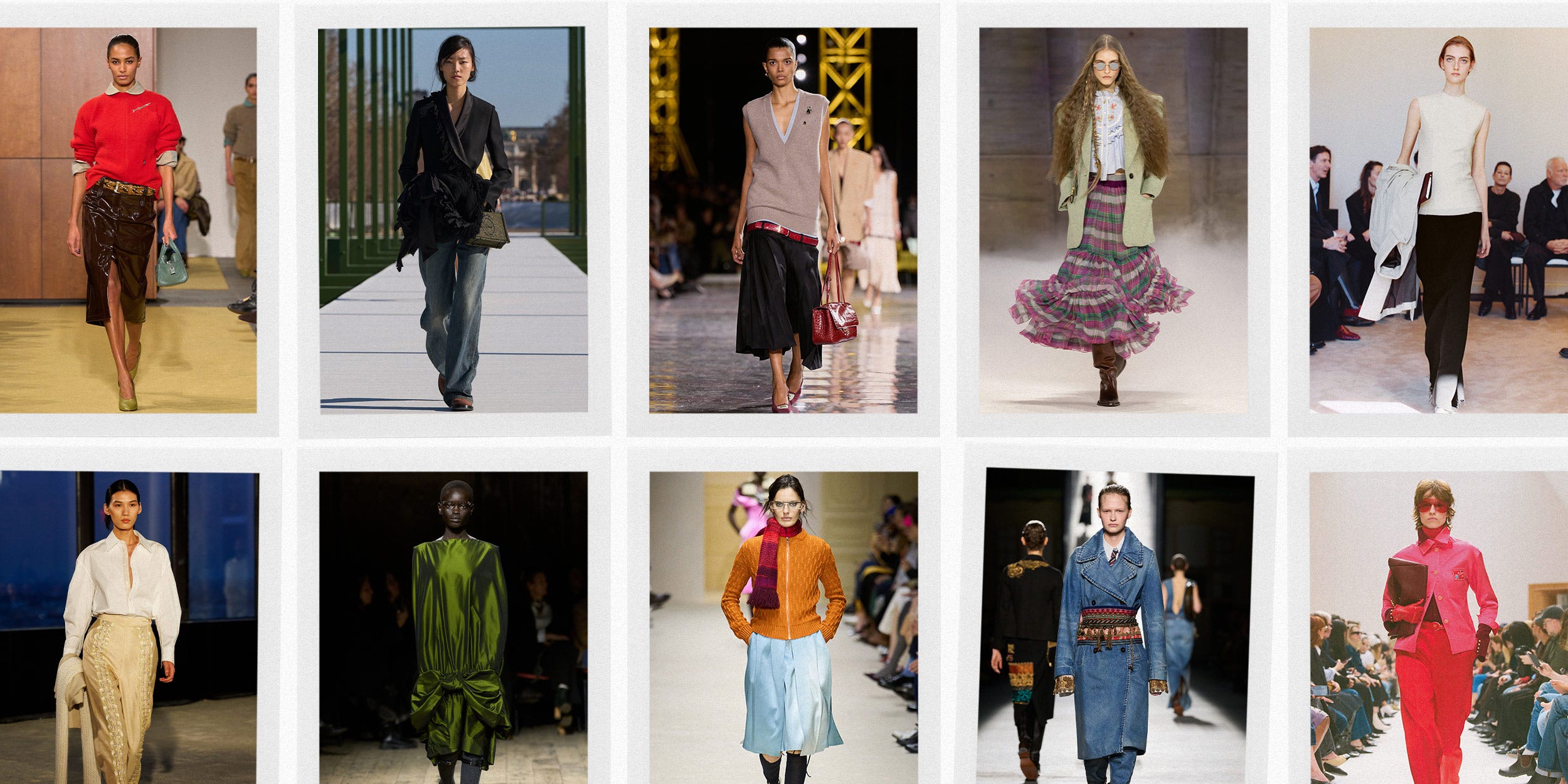
The plaid appearing this season is not the wide-wale flannel of weekend dressing. It is cut into evening-adjacent silhouettes – fitted blazers worn as dresses, wide-leg trousers in fine wool plaid paired with elevated tops, plaid suiting that skews formal rather than academic. The pattern itself often leans toward more refined colorways: burgundy-and-cream, charcoal-and-gold, deep navy with a narrow windowpane. These are not the loud plaids fighting for attention; they are plaids that have decided they belong in rooms they were never invited into before.
What gives this context-switching its credibility is the construction behind it. When plaid is cut well – when the pattern is matched at the seams, when the tailoring is precise – it carries an authority that transcends the casual associations the fabric has accumulated. The cocktail-party plaid of fall 2026 works because it is being executed with the same attention to craft that would go into a formal silk or a structured crepe. The casualness of the pattern is working in tension with the formality of the cut, and that tension is exactly where the interest lives.
Styling choices are doing significant work here. Plaid pieces this fall are being paired with heels rather than boots, with fine jewelry rather than chunky accessories, with silk or satin underneath rather than a simple T-shirt. Each of those decisions individually is small, but together they completely relocate where the plaid lives in the social landscape. The fabric has not changed – its companions have.
There is a long history of fashion using pattern-shifting to signal cultural moments, and plaid’s promotion to evening wear is consistent with a broader appetite for dressing in ways that defy easy categorization. When the external world becomes harder to read, dressing becomes one of the few legible ways to assert a position – and choosing plaid for a formal occasion is a quiet but firm statement that you are not particularly interested in being told what fabrics go where.
It also opens a genuinely practical door. A well-cut plaid blazer that works for a cocktail party is also a blazer that works for the office, for dinner, for a gallery opening. The versatility that comes with refusing to assign plaid to a single context is not accidental – it is one of the real arguments for the trend beyond its visual appeal. Building a fall wardrobe around pieces that refuse single-use logic is both a financial and a philosophical position, and plaid-as-formalwear makes that argument clearly.
Dressing Against Type
The through line connecting satin-at-the-office and plaid-at-the-party is not fabric or pattern – it is a deliberate rejection of the idea that clothing has a fixed address. Fall 2026 is not the first season to gesture at this, but it is one of the more committed executions of it. The styling is too specific and too consistent across the season to read as accident or trend-for-trend’s-sake. Something more structural is happening: the dress code itself is being treated as the thing that needs updating, not just the pieces within it.
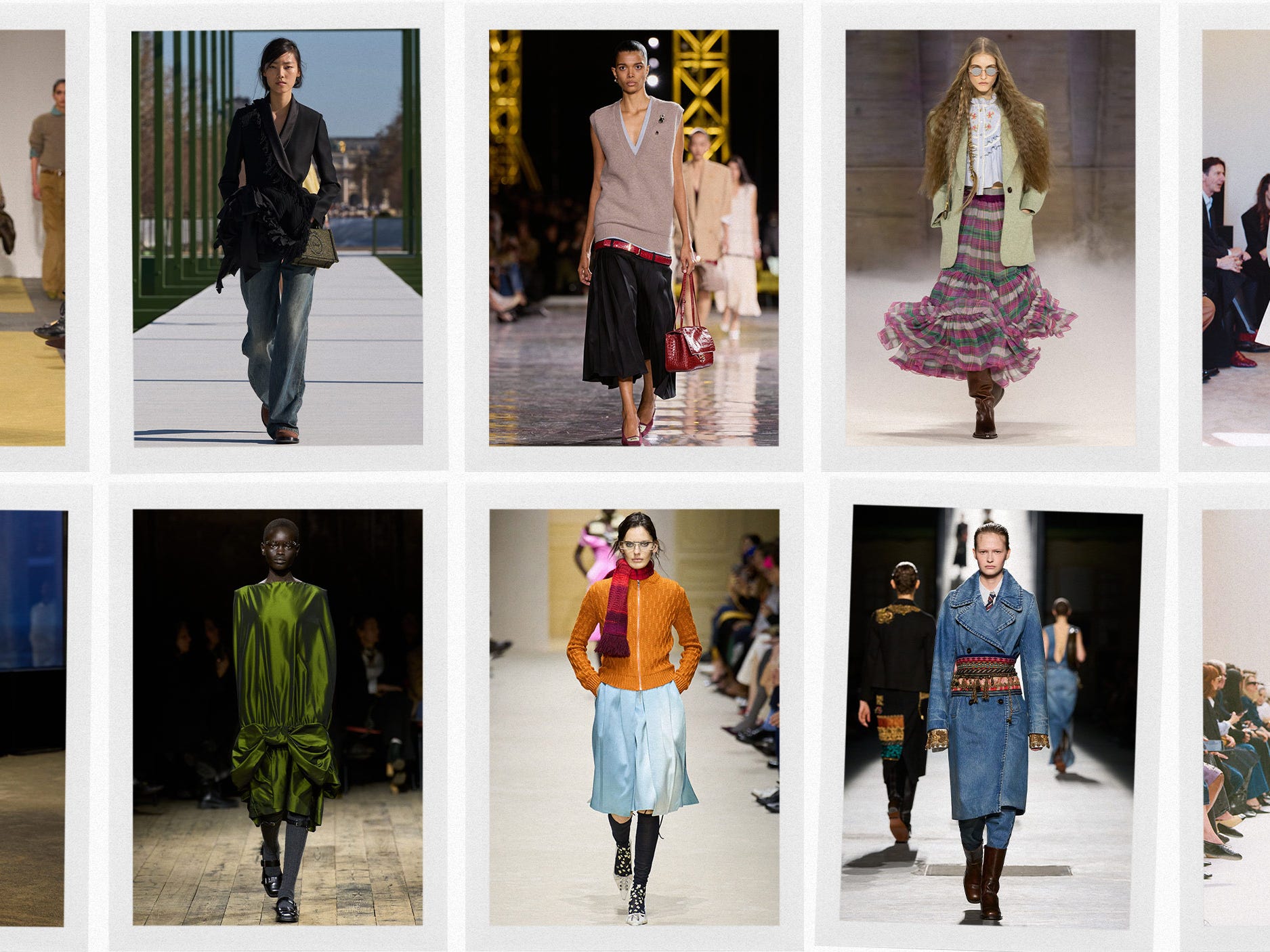
That raises a question worth sitting with as the season takes shape in stores and on streets. If satin and plaid are being liberated from their assigned contexts, what replaces the shorthand those contexts once provided? Occasion dressing gave everyone a shared language – formal meant one thing, casual meant another, and you could read a room partly by reading what people wore to it. When those signals start crossing, the language gets harder to parse. Is that a loss worth mourning, or is it simply the cost of a more interesting wardrobe?