




One Actress, Two Women, Zero Overlap
Florence Pugh plays two distinct characters in Netflix’s East of Eden – Cathy Ames and Kate – and the distance between them is built, in large part, with brushes and bobby pins. The transformation isn’t subtle. Where Cathy reads as soft, approachable, almost girlish, Kate projects authority and calculation. Getting that contrast right fell to two people who know Pugh’s face as well as anyone: her personal hairstylist, Jaime Leigh McIntosh, and her makeup artist, Heba Thorisdottir.
Between the two of them, McIntosh and Thorisdottir developed visual languages for each character – Cathy’s flushed cheeks and innocent waves versus Kate’s striking red lip and commanding crown – that do as much narrative work as the dialogue. The beauty choices aren’t decoration. They’re character construction.

Cathy Ames: The Architecture of Innocence
Cathy’s look is built to disarm. Thorisdottir’s approach to her makeup centers on flushed cheeks – the kind of color that reads as warmth, as health, as someone who blushes rather than schemes. It’s a deliberate softness, the sort of flush that makes a face look lived-in rather than constructed. The effect is that Cathy appears unthreatening, even when the story tells you otherwise. That tension between the character’s actual nature and what her appearance suggests is precisely the point.
McIntosh’s contribution to Cathy’s look lands in the hair: innocent waves that carry the same logic as Thorisdottir’s makeup. Loose, natural-looking movement signals openness. There’s no severity in waves. They fall rather than hold, and that quality – the sense that nothing is locked into place – reads as approachability in a way that structured styles simply don’t. Cathy’s hair is meant to look like it happened rather than like it was decided upon.
Together, the flush and the waves build a character who appears uncontrived, which, in the context of who Cathy actually is, is a quiet form of visual irony. Both McIntosh and Thorisdottir are working in the same direction: creating a look that functions as a mask without announcing itself as one. That’s technically difficult. A beauty look that’s supposed to seem like no beauty look at all requires more precision, not less.
Kate: Control Made Visible
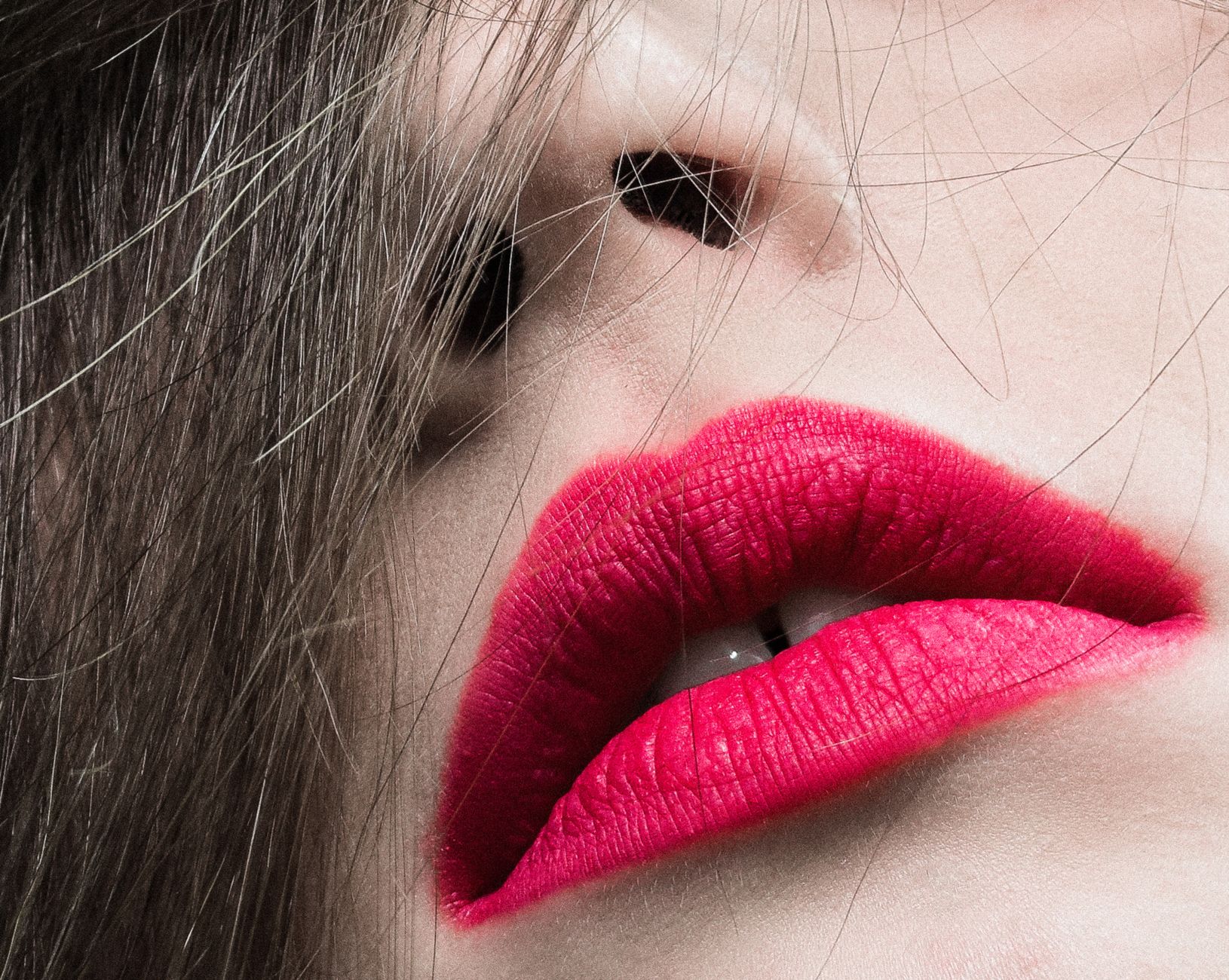
Kate operates differently, and so does everything on Pugh’s face and head when she becomes her. Thorisdottir’s red lip for Kate is not romantic – it’s declarative. A red lip in this register says something about the person wearing it: they’ve made a choice and they’re not walking it back. It draws the eye and holds it, which is what someone like Kate needs to do. She commands rooms. The lip is the first signal that she intends to.
McIntosh’s work on Kate’s hair follows the same logic – a crown silhouette that adds height and structure, pulling everything upward and into place. Where Cathy’s waves fall, Kate’s style rises. Where Cathy’s look implies casualness, Kate’s makes no such gesture toward ease. The crown communicates control: this is a woman who has decided exactly who she is, and the hair says so before she opens her mouth.
The Technical Demands of Playing Both
What makes the work of McIntosh and Thorisdottir particularly interesting is the consistency of their subject. Pugh’s bone structure, her coloring, the specific proportions of her face – all of that stays constant. The task isn’t to disguise her, it’s to redirect how those features read. A flushed cheek on the same face that later wears a commanding red lip is read entirely differently by an audience, and the shift happens because of where the emphasis is placed, what’s softened versus what’s sharpened, what draws the eye and what recedes.
That kind of calibration requires deep familiarity with a subject’s face. McIntosh and Thorisdottir aren’t working from a general template – they know exactly how Pugh’s cheekbones catch light, how her hair behaves, where the natural movement in her features sits. Personal hairstylists and makeup artists who travel with a talent for long-form productions are doing something different from set department heads running dozens of looks across dozens of faces. The intimacy of the working relationship is part of what makes this level of character specificity possible.
There’s also the continuity challenge: across however many shooting days East of Eden required, every Cathy scene had to match every other Cathy scene, and every Kate scene had to hold its own internal consistency while remaining clearly distinct from Cathy. That’s a documentation and execution problem that sits entirely on the beauty team. Audiences won’t notice if it’s done correctly. They’ll notice immediately if it isn’t.
What McIntosh and Thorisdottir have described is a system in which two looks carry real dramatic weight – where the decision to flush a cheek or build a crown isn’t aesthetic preference but character work. Thorisdottir’s red lip for Kate is striking precisely because Cathy’s lips never demanded that kind of attention. The contrast is the point, and the contrast was planned. The mechanics of a single makeup element can shift how a face reads entirely – and Kate’s lip is proof of that applied at a high level.
The crown McIntosh built for Kate doesn’t appear in any of Cathy’s scenes. That absence is as deliberate as the presence.