




A Show of Hands Across the Atlantic
French luxury’s longest-standing trade association, the Comité Colbert, has mounted an exhibition in New York that pulls from more than two hundred years of Franco-American exchange in fashion, jewelry, perfume, and the decorative arts. The show is titled Hidden Treasures, and the name earns its weight – among the objects on display is an original Kelly bag, the kind of artifact that doesn’t leave its glass case for casual occasions.
The Comité Colbert was founded in 1954 and now represents roughly ninety French luxury houses, from Hermès and Chanel to Baccarat and Guerlain. Its purpose has always been to protect and promote the idea of French savoir-faire as a cultural and commercial export – and Hidden Treasures is the most visible American statement that mission has produced in years.
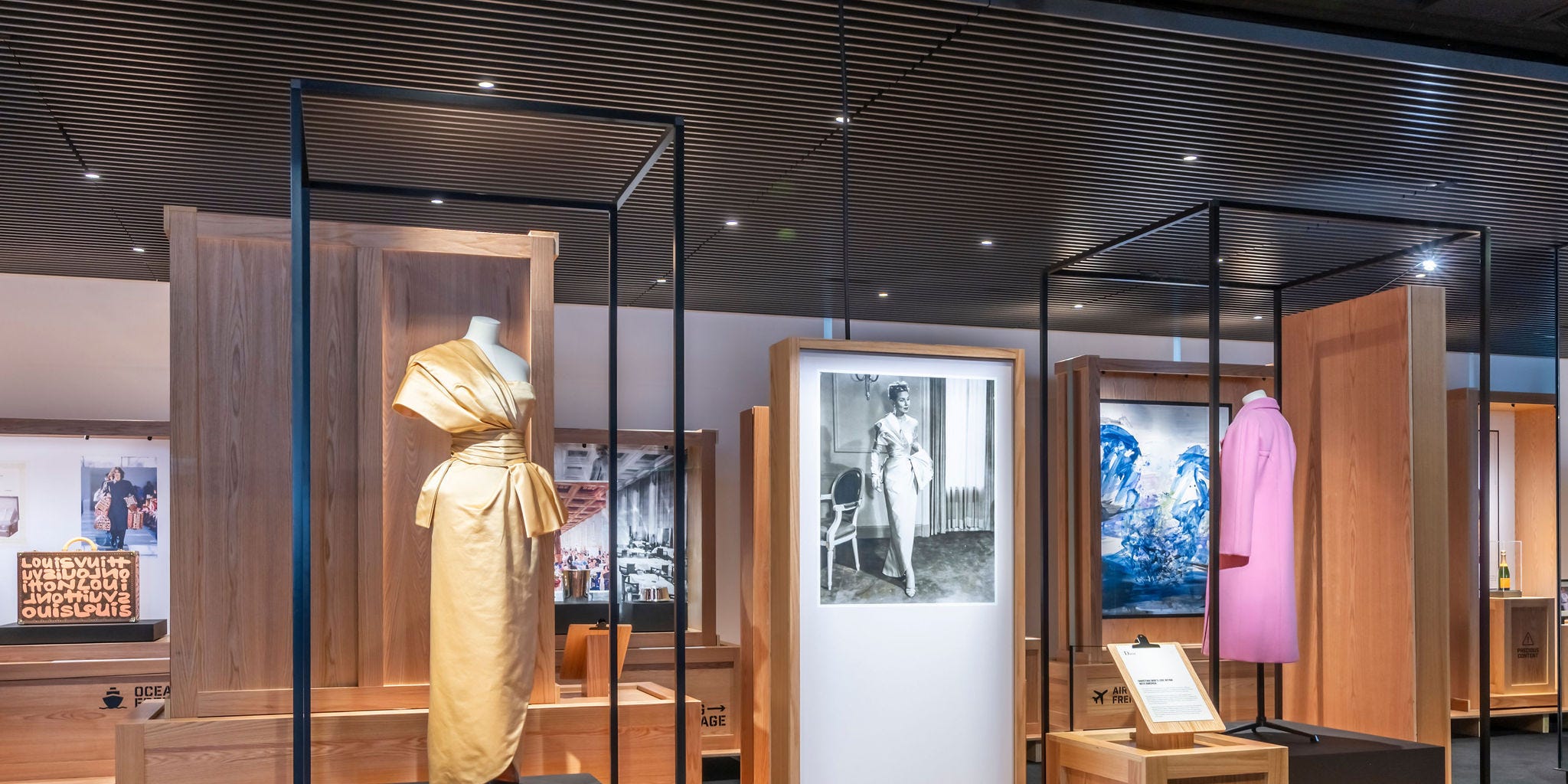
What makes this exhibition worth attending is not simply the objects themselves, but what their presence in New York argues: that the appetite for French luxury in America is not a recent marketing story, but a relationship with genuine historical depth, full of specific transactions, specific tastes, and specific people who carried things across the ocean in trunks.
What the Exhibition Actually Contains
The Kelly bag on display is not a recent production. Hermès introduced the structured handbag – then called the Sac à dépêches – in the 1930s, and it was renamed after Grace Kelly following a 1956 Life magazine photograph in which the actress used one to shield her pregnancy from cameras. The bag in this exhibition predates that cultural moment, which gives it a different kind of weight than the waiting-list object it later became. Seeing it outside of a retail context, stripped of its current price point and placed among other historical objects, reframes what it represents.
The Comité Colbert organized Hidden Treasures around the idea that French luxury houses hold objects in their archives that the public rarely sees – pieces that informed current collections, prototypes that were never produced at scale, gifts exchanged between maisons and their American clients across generations. The exhibition draws from those archives to build a material argument about continuity. French luxury, the show insists, is not a brand exercise. It is an accumulation of decisions made by specific craftspeople in specific ateliers over a very long time.
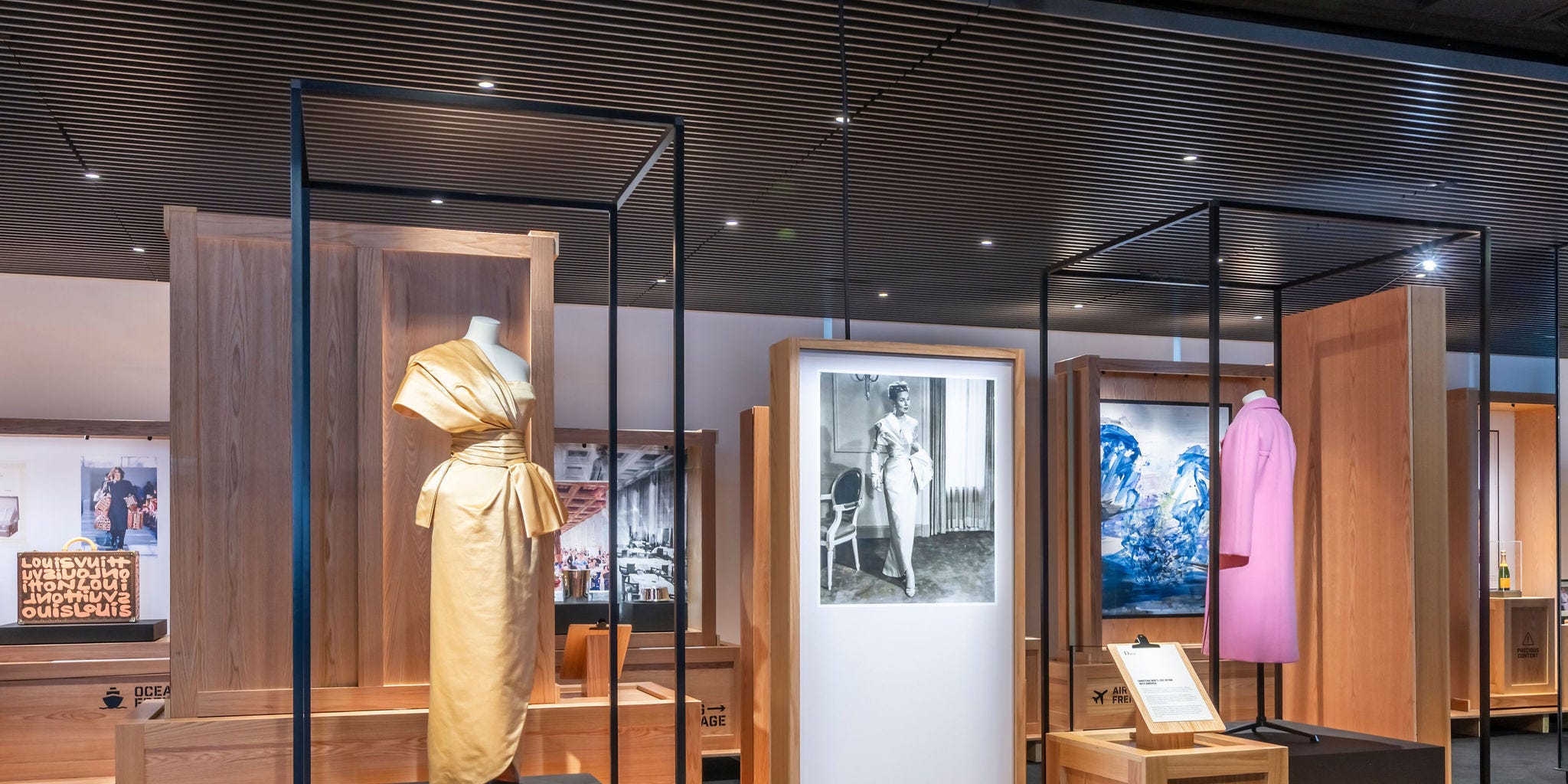
Beyond the Kelly bag, the exhibition includes contributions from multiple Comité Colbert members spanning categories that reach past ready-to-wear into crystal, fragrance, and leather goods. The curatorial logic connects American demand to French supply – showing, for instance, how American women’s taste for Parisian fashion in the late nineteenth and early twentieth centuries shaped what French houses actually produced. The relationship was never one-directional. New York and Paris were in active conversation, and the goods that moved between them reflect that back-and-forth.
Why the Comité Colbert Is Doing This Now
The timing of Hidden Treasures is not incidental. French luxury is under considerable commercial pressure in 2024 and into 2025 – LVMH reported a slowdown in organic revenue growth, and Kering posted significant profit declines driven largely by Gucci’s struggles. Against that backdrop, an exhibition that foregrounds heritage and historical depth is a strategic move as much as a cultural one. Reminding American consumers that these houses have been relevant for two centuries is a different argument than anything a seasonal campaign can make.
The Comité Colbert has leaned into cultural programming before, but its American presence has historically been lighter than its European footprint. Bringing Hidden Treasures to New York signals a deliberate push to strengthen the association’s visibility in the United States market, which remains the largest single destination for French luxury goods exports. That context sits behind every vitrine in the show, even when the objects themselves seem purely historical.
There is also something worth noting about what an exhibition like this does for the member houses individually. Archives are expensive to maintain and rarely generate direct revenue. Placing archive objects in a public exhibition justifies that cost, generates press, and positions heritage as active rather than stored. The Kelly bag is not just a beautiful object under glass – it is proof that Hermès has been making the same thing, at the same level of craft, for nearly a century. That argument is worth more than an advertisement.
The Long Arc of Franco-American Taste
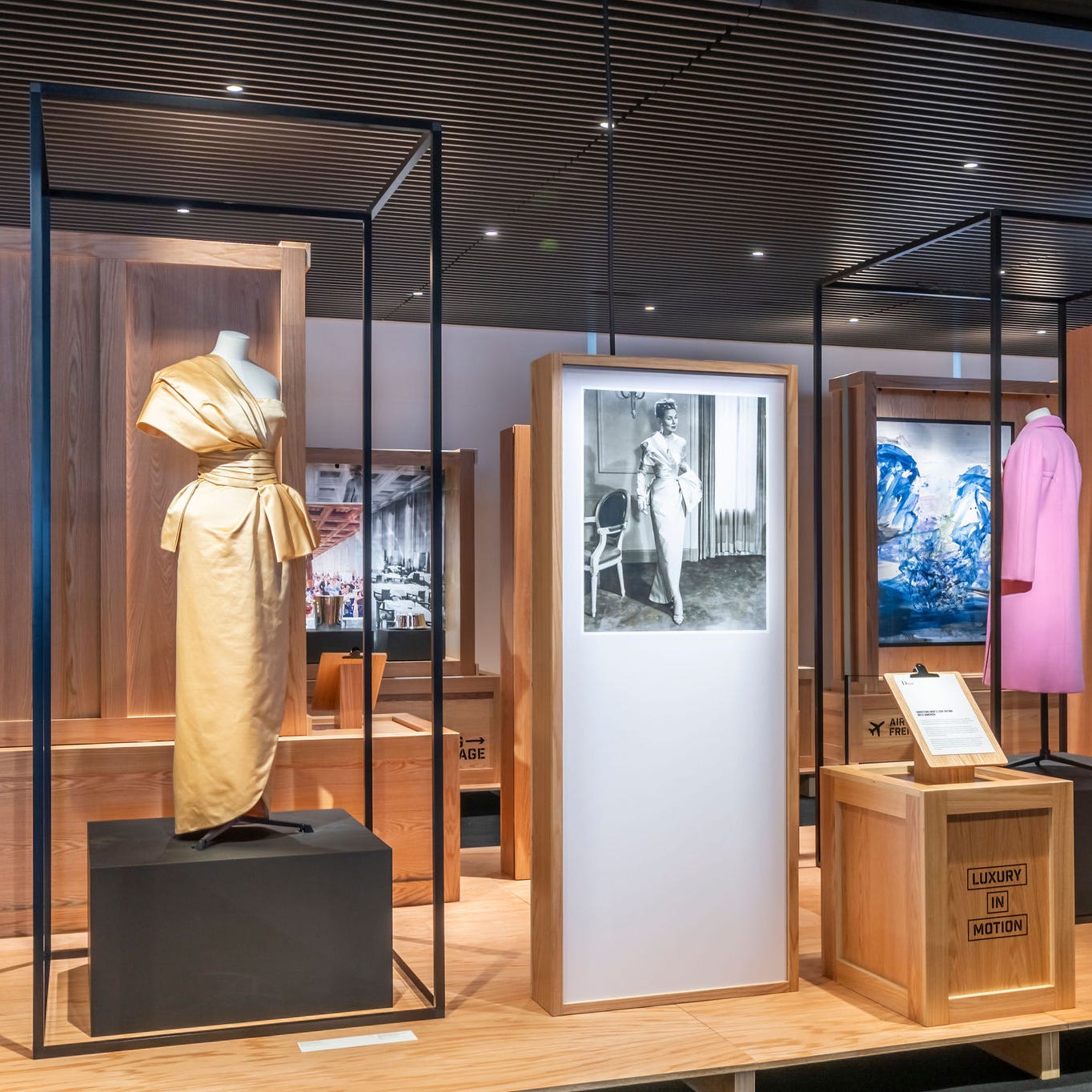
The Franco-American exchange the Comité Colbert is celebrating did not begin with postwar couture or the rise of the luxury conglomerate. American buyers were traveling to Paris for clothes and objects as early as the mid-1800s, and French houses were creating specific lines – adjusted silhouettes, different colorways, occasionally different price structures – to meet American preferences. Department stores including Lord & Taylor and Marshall Field’s maintained Paris offices to source directly from French producers. By the early twentieth century, the relationship between French supply and American demand was so entrenched that the U.S. government had to negotiate trade agreements specifically addressing couture imports.
That history is the ground Hidden Treasures stands on. The exhibition does not present French luxury as a gift given to America, but as something built collaboratively through commerce, taste-making, and the movement of specific objects through specific hands. The original Kelly bag is the most legible symbol of that argument – an object that crossed into American consciousness through a photograph of an American woman, taken by an American magazine, in a European principality – but it is one artifact inside a much larger claim.
The Comité Colbert has not announced how long Hidden Treasures will remain on view in New York, or whether it will travel to other American cities. Given the investment involved in moving archive-quality objects across the Atlantic and installing them securely, the exhibition’s run will almost certainly be short. Anyone with a serious interest in French luxury history – not the brand mythology, but the actual objects and the decisions embedded in them – should go while the Kelly bag is still in the room.