




A Canvas Where Longing Takes Shape
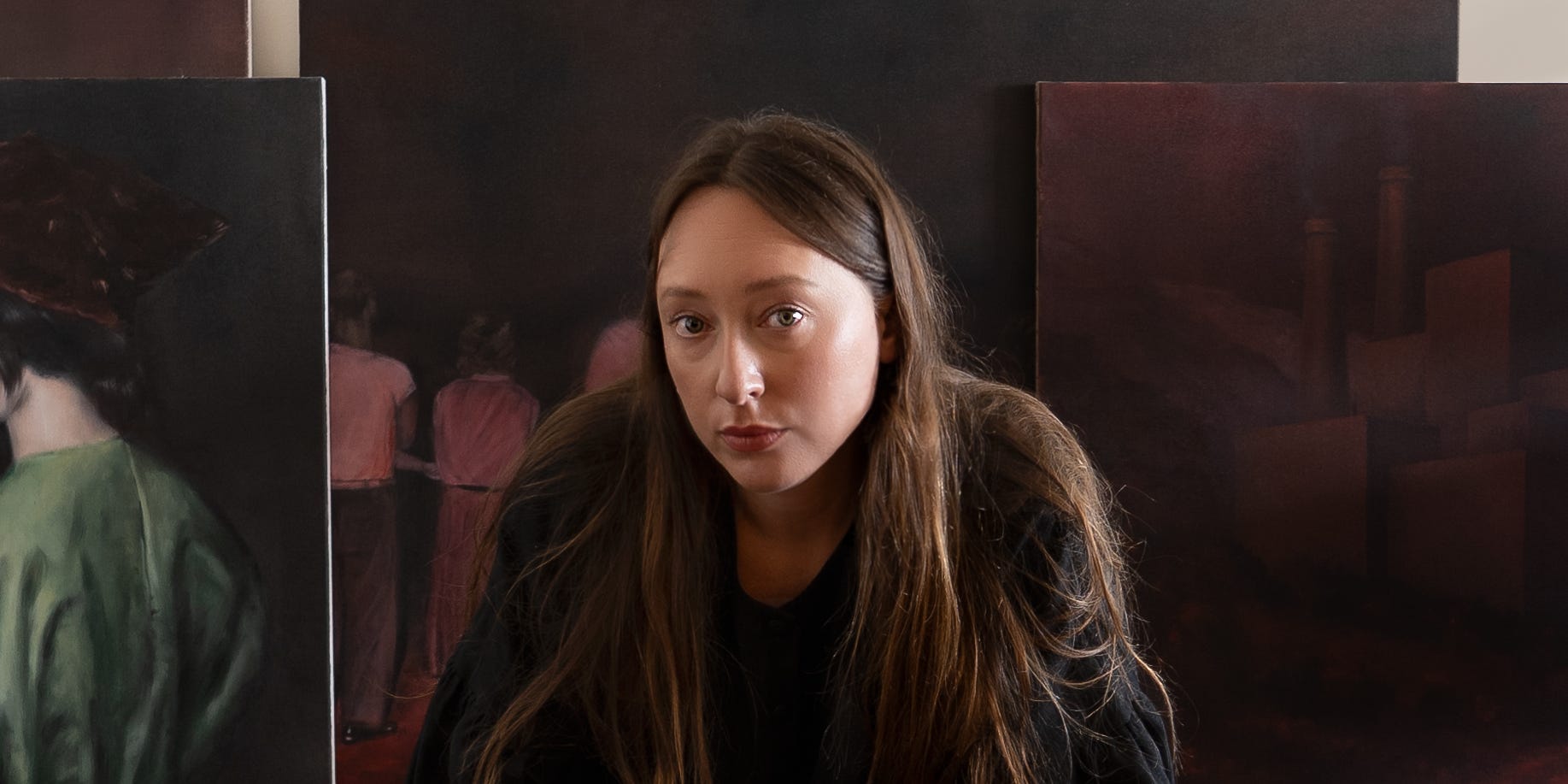
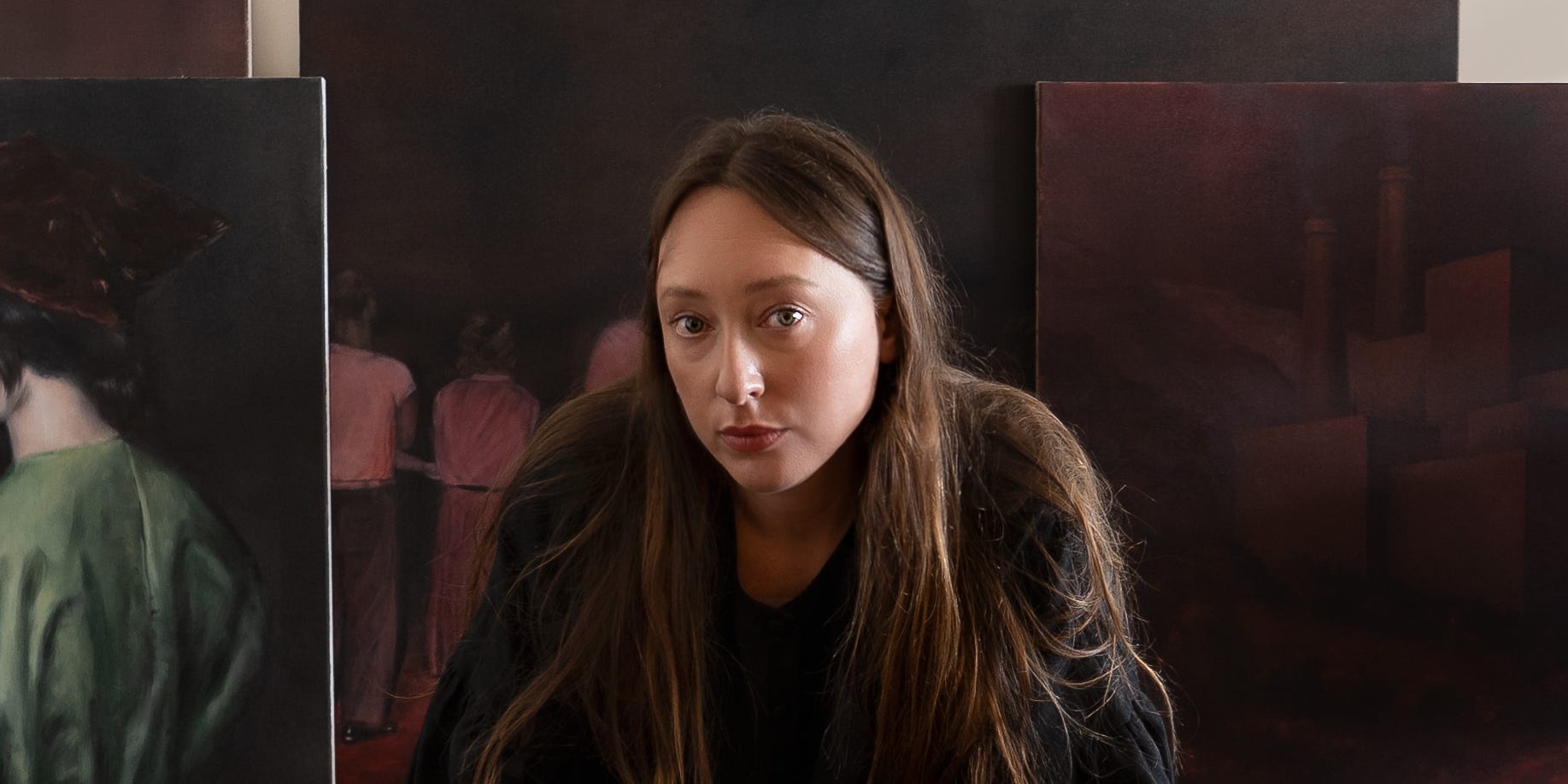
English painter Mia Middleton has brought her most personal body of work yet to Los Angeles for her first solo show in the city, titled Summoning Cleo. The exhibition doesn’t soften its subject matter. It sits squarely inside the emotional wreckage and stubborn hope that define the experience of trying to conceive – territory that the art world has historically kept at arm’s length, wrapped in abstraction or metaphor thick enough to insulate viewers from discomfort.
Middleton refuses that insulation.
What emerges across her canvases is something closer to documentation than decoration – figures rendered with an unnerving directness, bodies caught mid-longing, an imagined child conjured into paint before she exists anywhere else. The show’s title names that child: Cleo. She is summoned, not born. Not yet, and perhaps not ever – and Middleton doesn’t pretend otherwise.
Who Is Cleo, and Why Does She Matter
The name carries weight throughout the exhibition. Cleo is Middleton’s future child – or the idea of one – projected onto canvas with a specificity that feels almost reckless in its vulnerability. Giving a name to an unconceived child is an act most people perform privately, in the margins of journals or the silence after a negative test. Middleton does it publicly, in oils, on gallery walls in Los Angeles, where strangers can stand before that longing and recognize something in it.
That recognition is precisely what makes Summoning Cleo land differently from other exhibitions treating fertility or reproduction as subject matter. There is no clinical distance, no sociological framing softening the edges. Middleton paints from inside the experience – the waiting, the grief that doesn’t announce itself cleanly, the strange psychological state of mourning someone who was never fully present. Her work acknowledges that trying to conceive involves a particular kind of loss that has no formal language and even less cultural visibility.
The “eerie” quality that threads through her imagery is not stylistic affectation. It comes directly from the subject: the liminal space between wanting a person to exist and that person not existing. Middleton holds that space open rather than collapsing it into resolution, which is what makes the paintings uncomfortable in the best sense – they do not let the viewer off the hook with a tidy emotional arc.
Los Angeles as a Stage for Difficult Intimacy
Choosing Los Angeles for this first solo show is not incidental. The city has become a genuine center of gravity for contemporary painting over the last decade, drawing artists who find its light, its sprawl, and its particular cultural restlessness useful. For Middleton, arriving there with work this raw – this tied to her own body and its uncertainties – means placing something deeply private inside a very public conversation about what painting can and should do right now.
The show’s format as a solo exhibition matters too. There are no other artists to share the interpretive load, no group-show context to dilute or redirect how the work reads. Every painting in the gallery traces back to the same source: one woman, one body, one name written in anticipation of a life not yet lived. That concentration gives Summoning Cleo an intensity that a larger, more diffuse exhibition simply couldn’t sustain. Viewers encounter Middleton’s interiority at full volume, with no fade.
Fashion and art have long shared an interest in the body – its silhouette, its labor, its capacity to carry meaning beyond the purely physical. Middleton’s work pushes that conversation into territory the runway rarely reaches: the body as a site of waiting, of medical uncertainty, of an identity being reconstructed in real time around something that keeps not happening. Her paintings don’t wear that difficulty lightly. They wear it the way bodies actually do – visibly, imperfectly, without apology.
Paint as the Only Honest Medium for This
There’s an argument embedded in Summoning Cleo about why painting specifically is the right form for this material. Photography would risk voyeurism or clinical detachment. Sculpture would impose too much object-permanence on something defined by its absence. But paint allows Middleton to make Cleo present and not-present simultaneously – to conjure without fixing, to show without proving. The medium’s inherent ambiguity between representation and abstraction mirrors the emotional ambiguity of the subject itself.
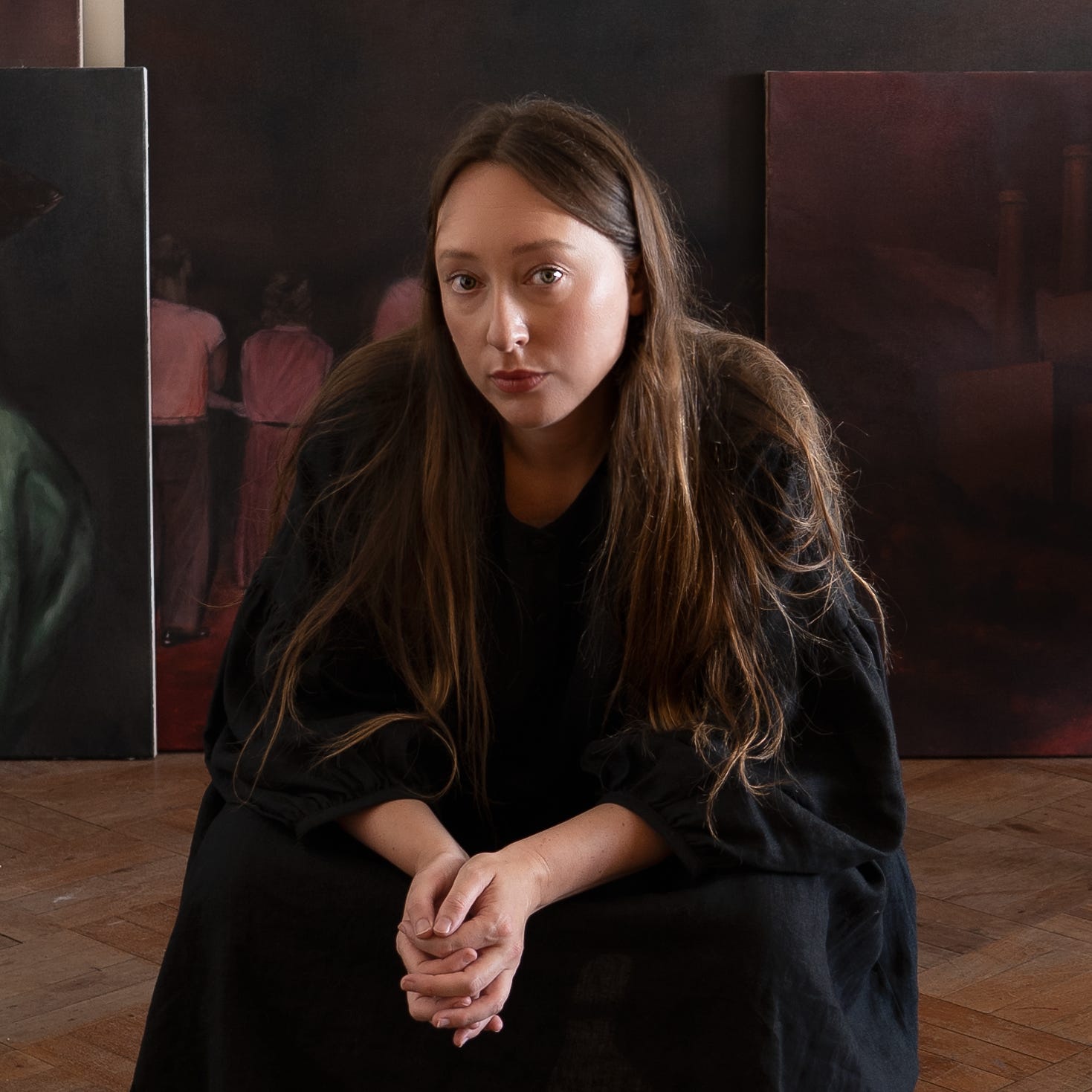
Middleton’s work as an English artist operating in the Los Angeles context also points to something worth noting about where the most emotionally unguarded painting is happening right now. A generation of painters – many of them women, many working from autobiography – are treating the canvas as a space where the body’s private experiences get named publicly, sometimes for the first time. Fertility struggles. Pregnancy loss. The gap between the body a person inhabits and the body culture expects them to perform. Middleton’s show fits within that current, but it also has a specificity, centered on one imagined child with one name, that separates it from the broader movement.
Cleo is already real in these paintings. That is both the most moving and the most destabilizing thing about standing in front of them – the awareness that Middleton has made someone visible who may never be visible any other way.