


A Monument Built by Two People Who Know What It Means to Be Outsiders
Mellody Hobson has spent decades operating in rooms where she was the only person who looked like her – boardrooms, investment conferences, Hollywood circles. That experience of standing apart, of being conspicuously different, did not diminish her. It sharpened her. Now, alongside her husband, filmmaker George Lucas, she is opening the Lucas Museum of Narrative Art in Los Angeles, a building designed to house and celebrate the full, untidy breadth of human storytelling – paintings, illustrations, cinema, sequential art – under one roof and one argument: that narrative art has always mattered, and has not always been treated as though it did.
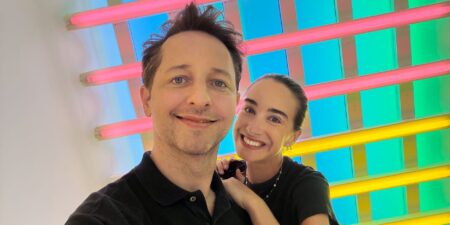
Hobson spoke with writer Derek C. Blasberg about the museum, about her own trajectory, and about why visibility – real visibility, not performative inclusion – changes the architecture of what people believe is possible for themselves.
The museum is not a vanity project. It is a deliberate cultural institution.
What the Lucas Museum Is Actually Trying to Do
Narrative art is a category that has long occupied an awkward position in the hierarchy of fine art. Illustration, movie posters, comic panels, magazine covers – these are forms that billions of people have encountered and been moved by, but that major institutions have historically dismissed as commercial, as decorative, as lesser. The Lucas Museum challenges that dismissal directly. Its collection pulls together work that documents how cultures communicate with themselves – how they pass down fear, desire, heroism, and shame through images arranged to tell a story.
George Lucas, who built one of the most durable storytelling franchises in cinematic history with Star Wars, has spent years collecting works that fall precisely into this undervalued space. The museum gives that collection a permanent home and a public argument: that the stories a culture chooses to tell, and the images it uses to tell them, reveal something essential about who that culture believes itself to be. Los Angeles, a city whose entire economic identity is built on narrative production, is the logical home for that argument.
The building itself, designed to sit in Exposition Park near the Natural History Museum and the California Science Center, is meant to function as an experience before a visitor even walks through the door. Architecture as prologue. The choice to place it in that particular part of Los Angeles – not in a wealthy neighborhood, not tucked into a district already dense with cultural institutions – is a statement about who the museum believes its audience is and should be.
Mellody Hobson’s Own Story as Context
Hobson co-chairs Starbucks and serves as president and co-CEO of Ariel Investments, a Chicago-based investment firm. She has sat on major corporate boards, has been a visible advocate for financial literacy, and has navigated spaces in American business where Black women remain dramatically underrepresented. Her public profile has been built on the consistent argument that difference is not a liability – that standing out, which can feel like exposure and risk, is also a form of information: it tells you exactly where the gaps are.
That perspective runs through her investment in the Lucas Museum. Hobson has talked openly about growing up without financial stability, about the particular hunger that instability creates, and about how storytelling – the stories you hear about people like you succeeding, or not – shapes what you understand to be achievable. A museum that broadens the definition of what counts as serious art is also, in her framing, a museum that broadens the definition of whose stories count as serious stories. Those two things are not separate.
When Blasberg interviewed her for Harper’s Bazaar, Hobson described being different – racially, economically, in terms of how she moved through elite institutions – not as something she survived but as something that became a tool. The word she reportedly used was “superpower.” That framing is not accidental. It reflects a specific philosophy about how people who are excluded from dominant systems can use their position at the margin as a point of advantage, of clarity, of motivation. The Lucas Museum, in some ways, is built on exactly that logic: take the thing the establishment ignored, treat it seriously, and build something lasting around it.
She has also been frank about the partnership with Lucas himself – about what it means to build something of this scale with a collaborator who is also your husband, whose creative legacy is already enormous, and whose name is on the door. That is a complicated position to occupy with grace, and by most accounts, Hobson has done exactly that, carving out genuine intellectual ownership of the museum’s mission without disappearing into the shadow of the Star Wars mythology.

Why Los Angeles, Why Now
Los Angeles in 2025 and into 2026 is a city managing a complicated self-image. The wildfires that devastated parts of the region in early 2025 left specific neighborhoods destroyed and reopened long-standing arguments about equity, insurance, urban planning, and who the city is actually built to protect. Opening a major cultural institution in this moment carries weight that a groundbreaking in a quieter period might not. The Lucas Museum is arriving into a city that is, right now, acutely conscious of what it values and what it loses.
The fashion and cultural industries that orbit Los Angeles are also at an inflection point. The industry’s relationship with storytelling – with image, with narrative, with the question of whose aesthetic vocabulary gets treated as universal – mirrors exactly the argument the Lucas Museum is making about art history. High fashion has spent years reckoning with which stories it told, which bodies and faces and cultural references it centered, and which it treated as peripheral. That reckoning is not finished. The museum, with its explicit commitment to expanding the canon of what narrative art includes, is entering a cultural conversation that extends well beyond museum walls.
Hobson’s own public presence – sharp, direct, elegantly dressed, unapologetically ambitious – has always carried an aesthetic dimension alongside its professional one. She appears at major events, sits for major profiles, and projects an image that is entirely composed without being artificial. That composure is itself a kind of argument, made through appearance and bearing as much as through words. In that sense, her work on the Lucas Museum and her broader public identity are continuous with each other: both are about insisting that what has been undervalued deserves a second, harder look.
The Lucas Museum of Narrative Art opens to the public in Los Angeles, and Hobson has said clearly that she intends the institution to outlast the moment of its opening, to become the kind of place that shapes how future generations understand what storytelling is and who gets to do it. What remains unresolved is whether Los Angeles – fragmented, expensive, and still sorting out the aftermath of a devastating fire season – is ready to embrace a museum built on the premise that its most commercially derided art forms were actually its most honest ones all along.