




A Film That Dresses Emotional Wreckage in Something Worth Wearing
Margaret Qualley has a particular gift for making vulnerability look like a choice rather than a crack in the armor. In Love of Your Life, director Rachel Morrison’s sophomore feature film, that quality gets its fullest workout yet – a story moving through loss and romance that Harper’s Bazaar screened and covered alongside interviews with the film’s principal cast. Qualley sits at the center of it, as she does most rooms she enters, and the production around her reflects the kind of attention to emotional texture that tends to separate films people remember from films people merely watch.
The cast around her is worth noting on its own terms.
Gabriel Basso, Aaron Pierre, and Patrick Schwarzenegger round out the principal ensemble, each bringing a different register to what is, at its core, a film about how people navigate desire when grief has already rearranged their internal furniture. Morrison, best known before this for her cinematography work, directs with the visual instincts of someone who understands that how a scene is lit tells you something a line of dialogue cannot. Her feature debut already established her as a filmmaker who earns her emotional moments rather than manufacturing them, and Love of Your Life appears to deepen that instinct.
What the Cast Brought to the Material
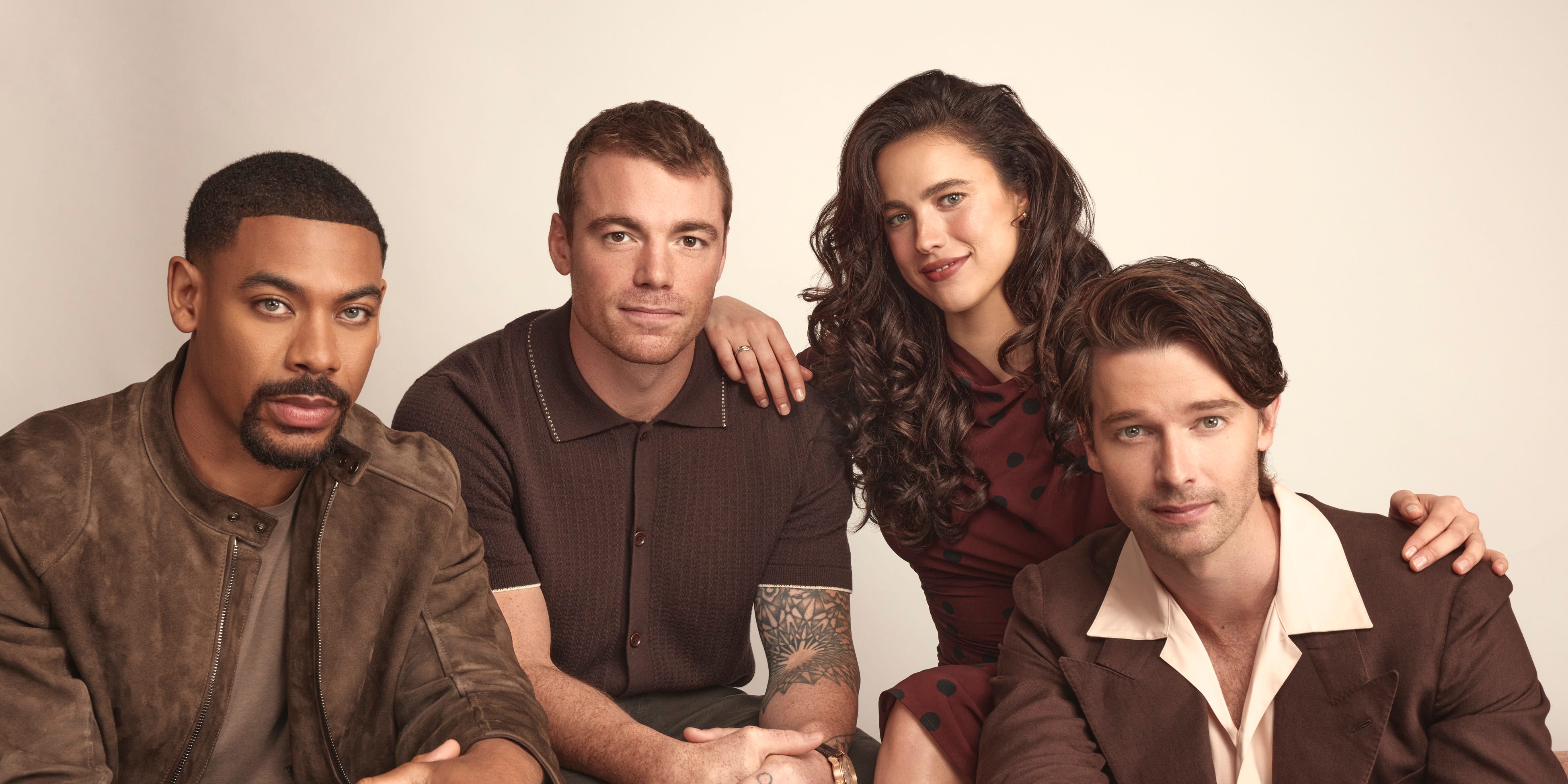
Qualley spoke to Harper’s Bazaar alongside her three costars about the project, and what emerged from those conversations was a picture of a production that didn’t treat its emotional subject matter as background noise. Loss – specifically the kind that doesn’t announce itself with a single dramatic moment but instead reshapes everything quietly – sits underneath the film’s romantic architecture. Qualley, whose career has tracked from Once Upon a Time in Hollywood to Poor Things to the Maëve Millay performance in Westworld that first got serious attention, has consistently chosen work that requires something of her beyond surface.
Gabriel Basso, who built significant television momentum with The Night Agent on Netflix, brings to the film a different kind of screen presence – contained, watchful, the sort of actor whose stillness reads as thought rather than absence. Aaron Pierre, whose profile has risen sharply in recent years through Rebel Ridge and Krypton, operates in a register that is physically magnetic without tipping into distraction. Patrick Schwarzenegger, carrying the most recognizable surname in the cast, has spent the better part of the last several years demonstrating that the name is not the career – his work in The White Lotus Season 3 shifted perception of what he’s capable of delivering when the material demands it.
Together, these four create an ensemble where the romantic and emotional stakes don’t feel distributed unevenly – Morrison’s directing appears to resist the instinct to build everything around one gravitational center, which is itself a structural choice worth examining. When Qualley is the lead and three strong male costars orbit the story, the temptation toward a certain kind of conventional romantic architecture is real. That Love of Your Life reportedly sidesteps it is what’s generating attention ahead of wider release discussion.
Rachel Morrison and the Weight of the Sophomore Film
Rachel Morrison became the first woman nominated for a Best Cinematography Academy Award for her work on Mudbound in 2018. Her debut as a director produced work that earned her a genuine reputation as a filmmaker rather than a cinematographer who occasionally directed – a distinction the industry collapses too quickly. Love of Your Life is where that reputation either deepens or stalls, and from what the Bazaar coverage suggests, it deepens.
Morrison’s background in cinematography means she thinks about the visual grammar of emotion in ways that writers-turned-directors or actors-turned-directors often don’t. Lighting, composition, and the way a camera moves through space when a character is in pain versus when they’re in love – these choices accumulate into tone, and tone is where films about grief and romance either earn their emotional weight or simply perform it for an audience that has learned to recognize the performance. Morrison seems to understand that distinction, and her cast clearly trusted her read on it.
The film’s title itself does something specific: Love of Your Life positions romance not as a discovery but as a category – the kind of love that gets labeled retrospectively, often after loss has made comparison possible. That framing puts grief and romance in the same sentence structurally, which is where the film apparently lives most comfortably. For a director whose visual instincts are trained on the specific and the concrete, it’s a title that demands she deliver on its emotional premise rather than retreat into aesthetic beauty alone. Morrison’s willingness to sit inside difficult emotional territory recalls the most committed documentary work – an appetite for the uncomfortable, unflinching specificity of how people actually feel.
Style, Presence, and Why the Fashion World Is Watching
Qualley’s off-screen presence has become as carefully observed as her on-screen work, and the intersection between the two is where fashion pays attention. She has worn Chanel with the ease of someone who understands that clothes are a language, not a costume – her longtime relationship with the house has produced red carpet moments that feel inhabited rather than performed. On a press circuit for a film about love and loss, those choices will carry additional weight, the way they always do when the material is emotionally serious and the actor bringing it is also a style figure with a point of view.
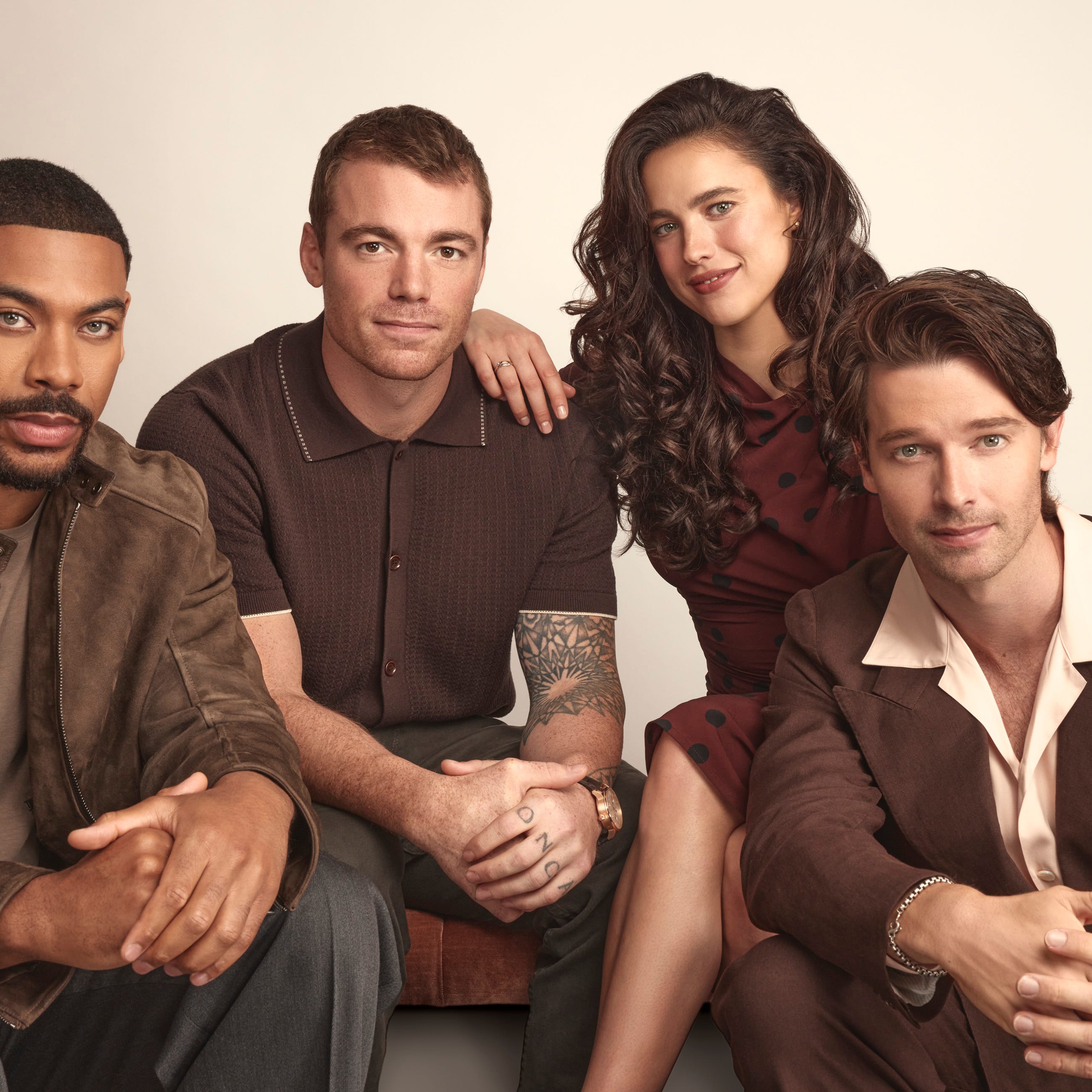
Basso, Pierre, and Schwarzenegger each bring their own evolving relationship with how male actors navigate visibility during a press run. Pierre’s emergence as a fashion-adjacent figure has been gradual and deliberate – he chooses appearances that suggest thought rather than availability. Schwarzenegger has moved away from the beach-casual image that first attached itself to his public presence and toward something more considered. Basso remains the least stylistically profiled of the three, which, depending on the film’s reception, may change quickly.
What Love of Your Life represents for all four actors is a project that asks audiences to take them seriously on emotional terms – not as genre performers or franchise components, but as actors capable of carrying the particular weight of a quiet, character-driven film about the things that rearrange a life. That is a different kind of visibility than action or spectacle provides, and in the current film landscape, it is also a rarer one. Morrison’s film arrives at a moment when mid-budget adult dramas are being greeted with something close to relief by the audiences who miss them.
Qualley, Basso, Pierre, and Schwarzenegger spent time in conversation with Harper’s Bazaar explaining what drew each of them to this project – and what Morrison asked of them that other directors haven’t. The details of those conversations, the specific things said about grief and desire and the strange way love gets categorized only after it’s survived something, are sitting in the Bazaar feature. Whether the film delivers on the weight of those conversations is the question that doesn’t get answered until it’s in front of a full audience, with no more interviews left to buffer the response.