



Owning the Flat Closure Decision
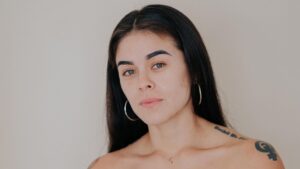
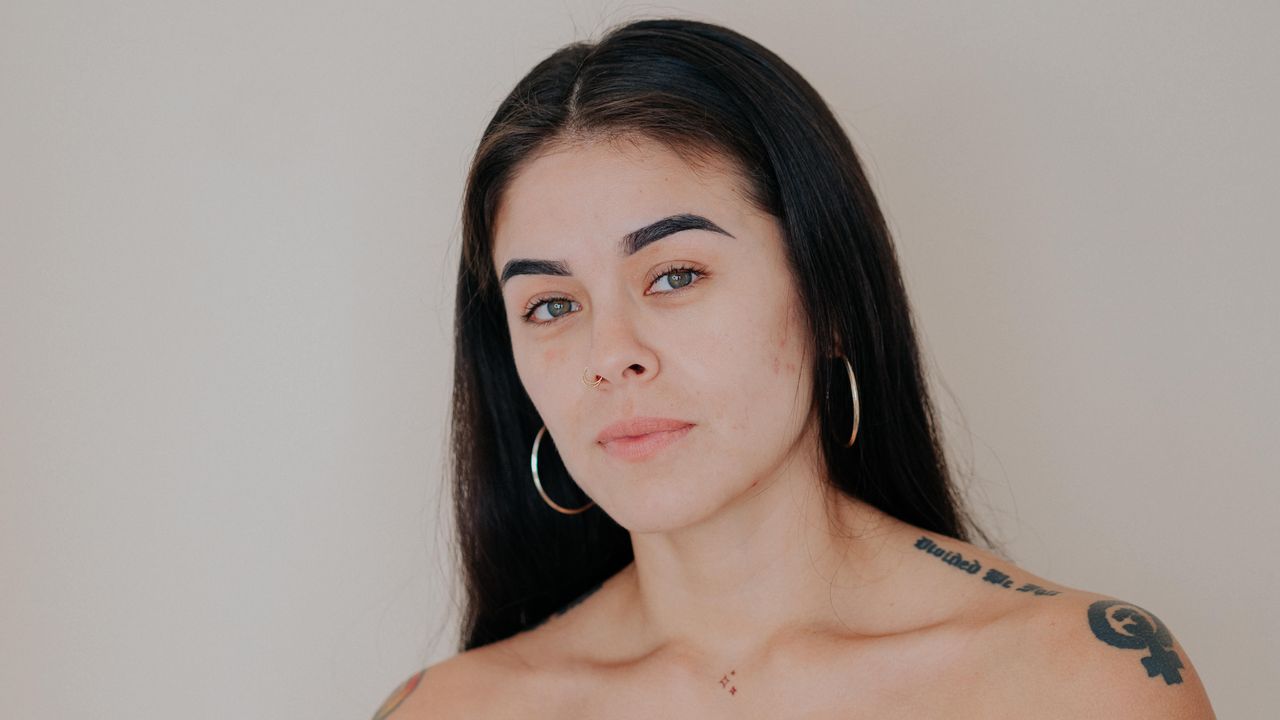
Stephanie Germino did not choose silence. After testing positive for a BRCA gene mutation and undergoing a preventative double mastectomy, she made two decisions that would define how she moved forward: she opted for an aesthetic flat closure instead of breast reconstruction, and she started filming herself topless to talk about it. The videos, posted under her handle “Thee Boobless Babe,” turned into something larger than personal documentation – they became a resource for women facing the same crossroads.
Germino recently sat down with Allure’s Perspectives podcast to walk through the reasoning behind both choices – the medical one and the public one. What emerged was a candid account of what it actually looks like to weigh reconstruction against going flat, and why that conversation is still not happening loudly enough in clinical settings or in beauty media.
What a BRCA Mutation Actually Puts on the Table
A BRCA gene mutation – whether BRCA1 or BRCA2 – significantly raises a person’s lifetime risk of developing breast and ovarian cancer. For carriers who receive this diagnosis, preventative surgery becomes a live option, sometimes an urgent one. A prophylactic double mastectomy removes breast tissue before cancer can develop, and the procedure is followed by a separate but equally weighted question: what happens to the chest afterward.
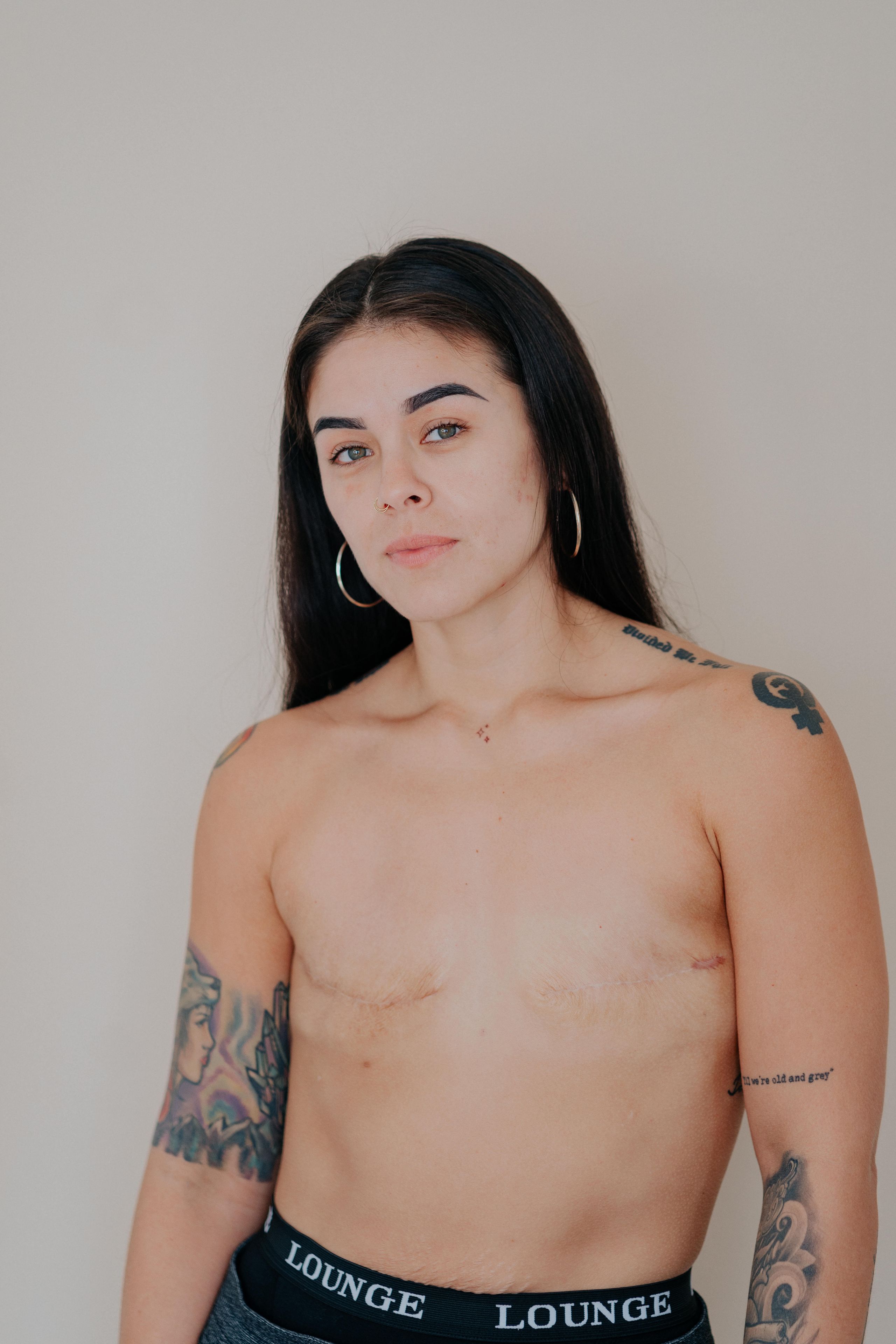
Reconstruction is the path most widely discussed in surgical consultations and in popular culture. It involves rebuilding the breast mound using implants or tissue from elsewhere on the body. But reconstruction is not the only option, and for Germino, it was not the right one. Aesthetic flat closure – where the chest is surgically smoothed and contoured without adding any new tissue or implants – is a legitimate, board-recognized surgical outcome. The issue is that it has historically been underrepresented in both patient education materials and the broader visual conversation around mastectomies.
Germino’s videos address that gap directly. By appearing topless and speaking openly about her chest, she puts flat closure into a visual frame that most people have simply never seen outside of a surgeon’s office – if they’ve seen it there at all. That visibility matters because patients cannot fully advocate for a choice they don’t know exists, and surgeons do not always volunteer it as an equally weighted option.
The name “Thee Boobless Babe” is deliberate in its lightness. It refuses the gravity that tends to settle over any conversation about mastectomies, and it signals to viewers immediately that Germino is not approaching this from a place of grief or apology. She is, by design, reclaiming language and framing before anyone else can assign meaning to her body on her behalf.
Why Going Public Was Part of the Choice
There is a specific kind of loneliness that comes with making a medical decision that most people around you cannot visualize. Germino’s decision to document her flat chest on video was, in part, a response to the absence of that visual reference in her own research process. When she was weighing her options before surgery, she looked for images and accounts of flat closures from people who had chosen them – not from a clinical standpoint, but from a lived one.
What she found was limited. The existing landscape of mastectomy content skews heavily toward reconstruction narratives, particularly those featuring implants, which carry their own complex recovery timelines, risks, and follow-up surgeries. Germino’s platform pushes back against that imbalance by simply existing – and by narrating the experience in real time rather than from a polished retrospective distance.
The Podcast Conversation and What It Opens Up
On Perspectives, Allure’s podcast dedicated to first-person health and beauty stories, Germino’s episode lands as a direct extension of what she does on social media – except with more space to develop the reasoning. She explains not just what she chose, but why reconstruction felt wrong for her specifically, and how she navigated a medical system that doesn’t always make flat closure feel like an equally respected option.
That dynamic – a patient having to actively push for a surgical outcome that their provider may be less practiced in or less enthusiastic about – is a known friction point for people seeking flat closures post-mastectomy. Surgeons trained in reconstruction sometimes have less experience delivering the smooth, contoured result that a well-executed flat closure requires, and patients who don’t know to ask specific questions can end up with outcomes that weren’t what they expected. Germino’s visibility around this issue functions as patient education in a format that reaches people where more formal resources often don’t.
The beauty angle here is not incidental. How a person’s chest looks and feels after a mastectomy is a beauty conversation as much as it is a medical one – it touches on body image, self-presentation, clothing, intimacy, and identity. Germino brings that into the frame explicitly, treating her body not as a post-surgical case study but as a body that exists in the world and deserves to be talked about in full.

For anyone currently holding a BRCA-positive diagnosis and trying to understand what flat closure looks like before making a surgical decision, Germino’s content offers something that a pamphlet cannot: a person who made the choice and kept going. That specificity – what the chest looks like, how she dresses, how she talks about herself – is the detail that changes the weight of the decision for someone who hasn’t yet made it.
The Perspectives episode is available now through Allure. And Germino’s videos, still uploading under “Thee Boobless Babe,” keep building the archive she wishes had existed when she needed it most. Whether the next person who finds them is three days post-diagnosis or three years past surgery, the question she’s quietly asking remains the same: what would you choose if you could actually see the options?