




Style Doesn’t Clock Out at the Delivery Room
There is a persistent cultural assumption that motherhood asks women to trade their individual identity for something softer, more palatable, less threatening. Fashion has long reinforced that idea – the maternity line that disappears into beige, the magazine spread where the celebrity holds a baby and looks, above all else, serene. Terry Newman’s new book arrives as a direct argument against all of that, tracing how some of the most recognizable women in fashion history refused that trade entirely.
Newman’s research spans decades of style, rebellion, and public life, anchoring itself around figures like Princess Diana and Kate Moss – women whose relationship to fashion did not dim after they became mothers, but in many cases sharpened.
The book doesn’t frame this as a how-to. It reads, instead, as an excavation.
What “Cool” Actually Meant for Diana and Moss
Princess Diana’s style evolution after becoming a mother is one of the most documented image shifts in modern public life. What Newman surfaces, though, is less about the clothes themselves and more about what Diana was doing with them – using fashion as a language for autonomy at a moment when very little else was hers to control. The off-duty jeans, the cycling shorts, the bold evening gowns worn on her own terms: each choice lands differently when read as an assertion rather than an aesthetic accident.
Kate Moss presents a different kind of case study. Where Diana operated inside an institution that tried, often unsuccessfully, to manage her image, Moss built one of fashion’s most durable personal brands on a reputation for seeming entirely unmanaged. Her transition into motherhood didn’t interrupt that. She remained a fixture on runways and in campaigns without recalibrating her public persona around her role as a parent. Newman’s framing makes clear that this wasn’t negligence – it was continuity. Moss simply declined to let one part of her life define the whole of it.
What links these two women across very different worlds is the refusal to perform a version of motherhood that fashion – and culture broadly – has historically rewarded: the softened, accommodating, background figure who lets her children take the foreground.
Newman’s Larger Argument About Identity and Ambition
The book’s deeper claim is that maintaining personal style through motherhood is not vanity. It’s continuity of self. Newman examines how individuality and ambition – two qualities that fashion celebrates relentlessly in women before they become mothers – are often treated as liabilities afterward. The women she profiles didn’t accept that premise. They kept working, kept expressing, kept occupying space in the way they always had.
That tension between public expectation and personal persistence is where Newman finds the most interesting material. The women in the book didn’t make headlines for being perfect mothers. They made headlines – often controversial ones – for being fully themselves at the same time as they were mothers. Newman’s position seems to be that those two things were never in conflict, even when the press and the public insisted otherwise.
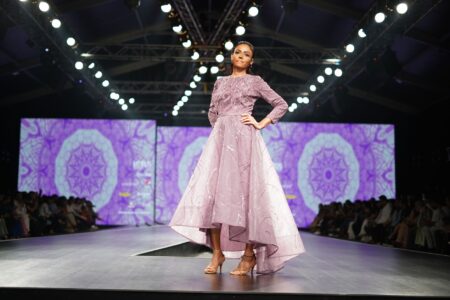
Fashion shows have long reflected how the industry imagines femininity at different life stages – the ingenue, the icon, the elder statesman of style. What rarely makes it down the runway is an honest image of a mother who is also still in her own story, not orbiting someone else’s. Newman’s book exists in the gap between what fashion celebrates on the catwalk and what it has historically expected of women the moment they leave it.
Why This Book Lands Now
The conversation around women’s identity post-motherhood has shifted considerably in recent years, with more public figures speaking openly about the pressure to disappear into parenthood. Newman’s book joins that conversation not with polemic but with portraiture – specific women, specific choices, specific moments where style became a form of resistance or simply a form of persistence.
What Newman offers that the broader cultural conversation sometimes lacks is granularity. It’s easy to say “mothers can still have style.” It’s more interesting to trace exactly how Diana navigated a royal dress code that was designed to contain her, or how Moss moved through fashion weeks in the years after becoming a parent without adjusting the image she’d spent a career building. The specificity is the argument.
There is also something worth noting about which women get to be the subjects of this kind of study. Diana and Moss are white, Western, and wealthy – their ability to maintain individuality through motherhood was never disconnected from access, privilege, and platforms that amplified every choice they made. Newman’s book centers on their stories, and those stories are genuinely revealing, but the framework they illustrate applies unevenly across the much broader landscape of women navigating motherhood without those resources.
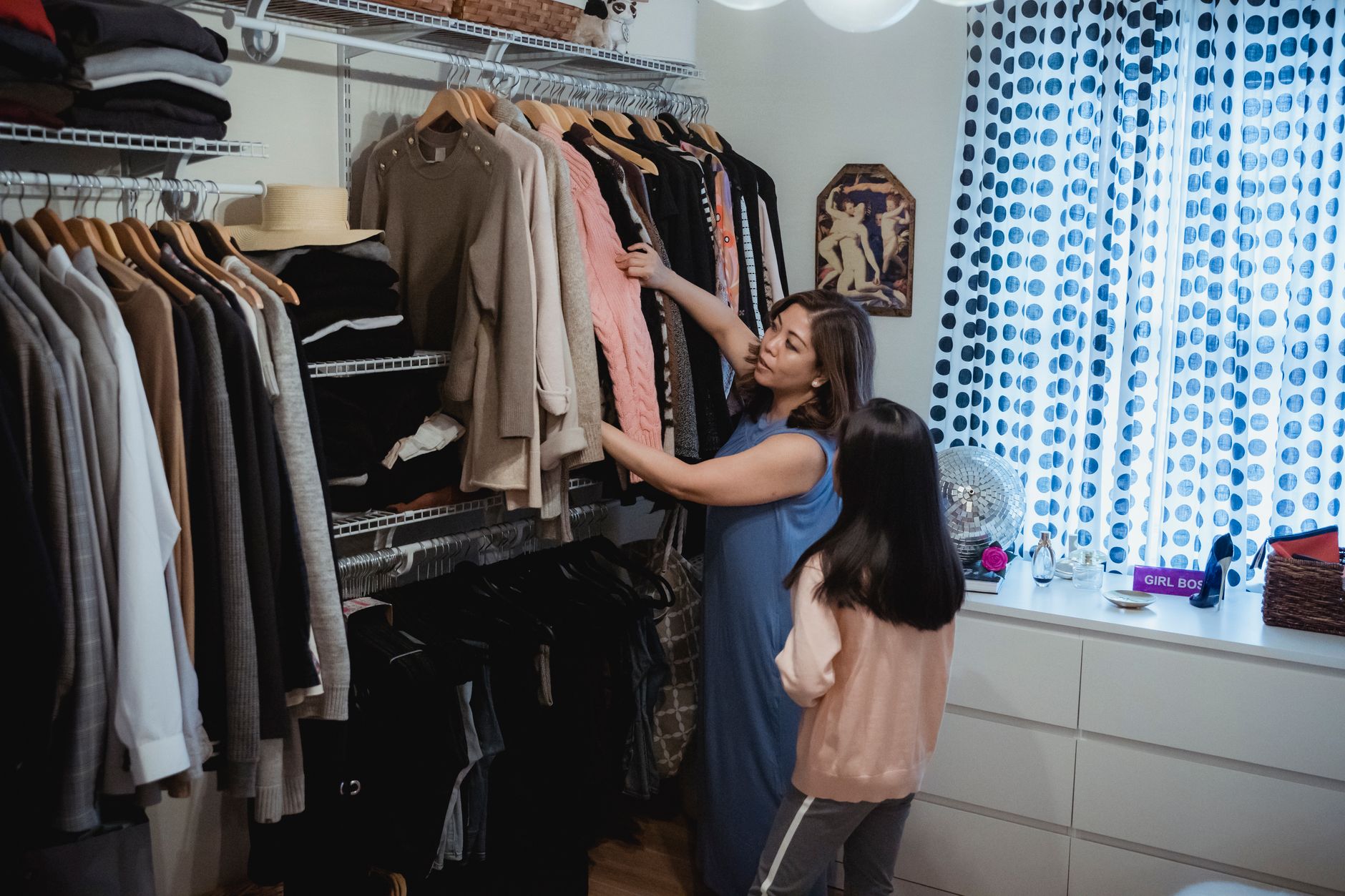
Newman’s book asks a question that fashion has mostly avoided: what does it mean to stay in the room – on the runway, in the frame, in the conversation – after you’ve had children? Diana and Moss didn’t answer that question the same way. But they both answered it loudly enough that a researcher is still tracing the shape of it decades later, and the industry that once dressed them still hasn’t fully worked out what to do with women who refuse the quieter role.