




The Gang Is Back, But the Punchlines Are Showing Their Age
Minor spoilers ahead. Scary Movie 6 arrives in 2026 carrying two decades of franchise baggage, a reunited cast that genuinely earns its applause, and enough bodily-fluid humor to fill a bingo card before the first act ends. Going in with calibrated expectations – meaning: zero expectations for plot, character development, or restraint – you might leave the theater with a few actual laughs. That’s not nothing, but it’s a narrower return than nostalgia promises.
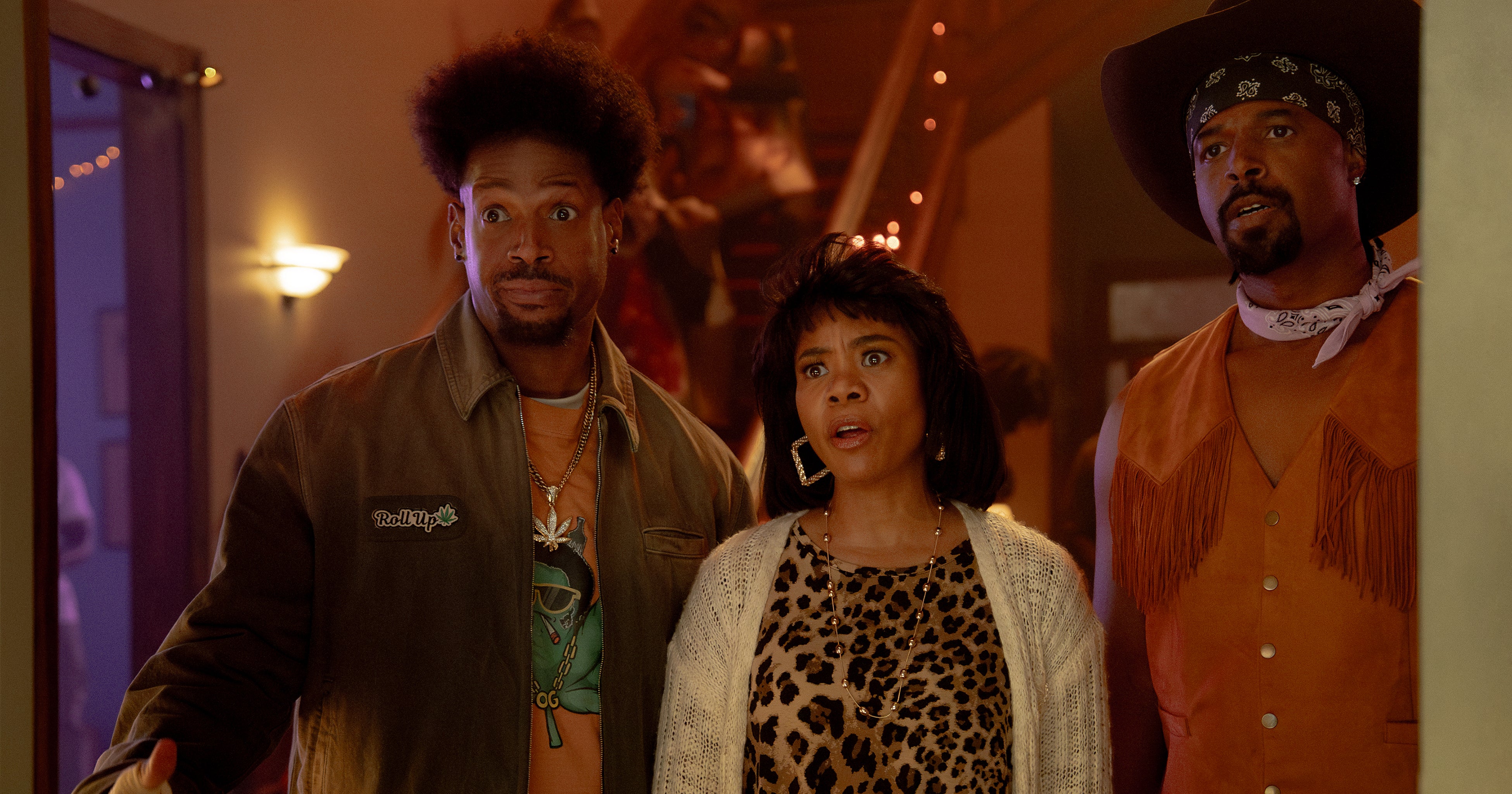
Anna Faris returns as Cindy. Regina Hall is back as Brenda. Marlon Wayans and Shawn Wayans reprise their roles as Shorty and Ray respectively. The reunion of the original cast is, genuinely, the film’s emotional high point – which either says a lot about their chemistry or a lot about everything else on offer.
What Still Works: The Franchise Knows Exactly What It Is
Scary Movie has always operated from a position of self-awareness, and the sixth installment leans into that harder than most entries in the series. The filmmakers don’t just wink at the audience – they construct an entire joke around Hollywood’s fixation on rebooting existing IP, including, with some nerve, a gag at their own expense. At one point, the film literally kills off the next-generation characters and makes that death the punchline. It lands because the creators are clearly in on it.
That meta-commentary is the sharpest tool the film has. When Scary Movie 6 is pointing the camera at its own absurdity – the factory-line reboot logic, the obligatory younger cast inserted to future-proof a franchise – it generates the kind of comedy that justifies the ticket price. The joke about Hollywood’s reboot obsession works precisely because it’s coming from inside the house.
What Doesn’t: The Gen Z Material Falls Flat
The film’s weakest stretch involves its treatment of Gen Z as a cultural punching bag. Pronoun jokes arrive on schedule. Extended bits about how much young people complain fill time that sharper writing might have used differently. The humor here isn’t offensive in a way that shocks or subverts – it’s just tired, the kind of material that scans as dad-coded in a way the film’s best moments actively avoid.
There’s a meaningful difference between a parody film that skewers everything equally and one that reserves its most repetitive jabs for the easiest available target. By the time the Gen Z material has cycled through for the third time, it starts to feel less like satire and more like a bit a writer couldn’t let go of.
The film also introduces a trans character named Jess, played by Benny Zielk, who is the son of one of the original characters. How that character is handled – and whether the film’s self-awareness extends to that material with the same care it applies elsewhere – is a fair question to carry into the theater with you.
This is the friction point that defines Scary Movie 6 as a whole: a film that can be genuinely clever about its own commercial existence, but that still reaches for shock value when cleverness runs thin. In 2026, simply being offensive isn’t enough to carry a scene. The franchise understood that once. The evidence in this installment is mixed.
The Reboot Formula That Won’t Quit
One of the more reliable frustrations of the modern Hollywood sequel is the mandatory next-generation subplot. Every franchise reboot eventually introduces the original characters’ children as a bid for continuity – and Scary Movie 6 is no exception. Faris, Hall, Marlon Wayans, and Shawn Wayans are all back, but so are their fictional offspring, presumably to carry future installments forward. The kids don’t match the originals, which is a persistent pattern across franchise reboots regardless of genre.
What distinguishes this film’s handling of that convention – at least partially – is that it acknowledges the problem out loud. Killing off the next-generation characters mid-film and treating the whole arc as a joke about sequel mechanics is a smarter move than letting the formula play straight. It doesn’t fully redeem the structural issue, but it demonstrates that someone in the writers’ room was paying attention.

Worth Seeing? Depends Entirely on What You Bring to It
Longtime fans of the franchise will find enough here to justify the nostalgia. The original cast’s chemistry is real, the film’s self-referential humor at its best is sharper than the series has been in years, and yes – somebody rolls a vagina like a blunt, because of course they do. Scary Movie 6 is not trying to be anything it isn’t, and on the specific terms it sets for itself, it mostly delivers.
The harder question is what the film’s commercial logic says about where comedy is heading. Crude humor worked as a standalone proposition in the early 2000s when the original films landed. The audience that grew up on those movies is now in their thirties and forties – old enough to clock every recycled joke, young enough to still laugh at them anyway. Comedy that trusts its audience enough to go somewhere uncomfortable tends to hit harder in 2026 than comedy that simply repeats what once worked.
What Scary Movie 6 gets right, it gets genuinely right. What it gets wrong sits in the same place it always has – the lazy reach for offense when the actual joke dries up. The film kills its own next generation on screen and calls it satire. Whether the franchise takes that logic seriously going forward, or whether a seventh installment shows up with a new batch of kids to replace the ones they just dispatched, is probably a more honest test of how self-aware this reboot really is.