



An Extra Digit Changes the Equation
MM6 Maison Margiela and Havaianas debuted a collaboration in Milan that nobody saw coming – a flip-flop with six toe posts. The Brazilian footwear brand, long associated with simple rubber thong sandals worn on beaches from Rio to Bondi, found itself at the center of a deliberately strange fashion moment courtesy of Maison Margiela’s diffusion line. The result is exactly the kind of anatomical provocation MM6 has made its signature: wearable, but only barely, and designed to make you look twice.
The Milan unveiling covered two distinct directions: the six-toe flip-flop and a stacked platform variation. Not both are headed to retail, however. Only one of the two designs has been confirmed for store distribution, which means one of these sandals is headed for the fashion archive before it even reaches a shop floor.
What Was Actually Shown in Milan
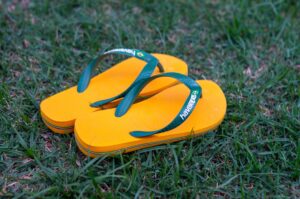
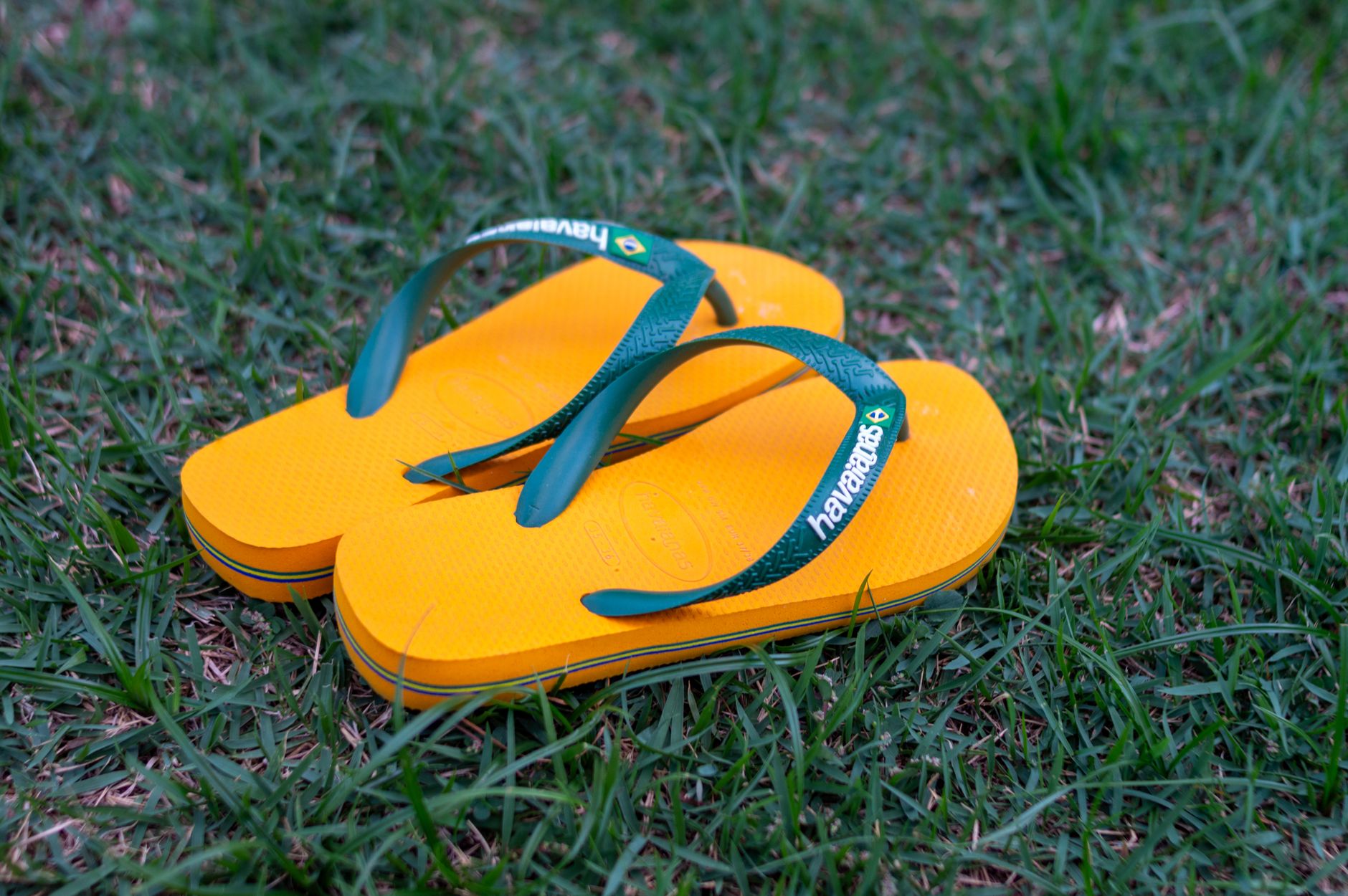
Havaianas built its global brand on a model that barely changes – the same flat rubber sole, the same Y-shaped strap, the same bright colorways that have remained essentially unchanged since the 1960s. That rigidity is exactly what makes it an interesting canvas for MM6, which has consistently taken everyday objects and applied just enough distortion to make them read as fashion statements rather than functional items. A sixth toe post sits precisely in that territory: the flip-flop still works as footwear, but the extra digit signals something is deliberately off.
The stacked platform version operates on a different logic. Where the six-toe design stays flat and keeps its strangeness in the strap geometry, the platform Havaianas builds height in a way that exaggerates the sandal’s casual origins – a beach shoe suddenly occupying several more inches of vertical space. Both designs were shown together in Milan, suggesting MM6 was presenting a range of ideas rather than a single locked concept.
Only one design proceeds to retail, and the confirmed commercial version is the six-toe flip-flop. That decision is interesting in itself. The platform could have been the safer commercial bet – stacked sandals have had consistent runway and street presence for several seasons – but MM6 is pushing the weirder, flatter, anatomically incorrect option to stores instead.
The Collaboration in Context
MM6 Maison Margiela operates as the more accessible, experimentally casual arm of the Margiela house, and footwear collaborations have been one of the clearest ways the label communicates its aesthetic to a broader audience. Partnering with Havaianas makes sense from a structural standpoint: the Brazilian brand manufactures at significant scale, the product is recognizable globally, and the price point sits well below what the mainline Margiela offers. That accessibility matters when the design concept itself is this specific.
Havaianas, for its part, has collaborated with designers and brands across the fashion and lifestyle spectrum over the years, attaching its rubber sole to everything from high-fashion editorials to licensed character prints. A collaboration with MM6 is a step into different territory – fewer people, more deliberate strangeness, and a customer base that is specifically seeking out the off-kilter. The six-toe flip-flop isn’t being sold as a beach essential. It’s being sold as an object.
One Design Moves Forward, One Stays in Milan
The decision to confirm only one of the two Milan designs for retail leaves the stacked platform Havaianas in an ambiguous position. It was shown, photographed, and reported on – but it won’t be available to buy, at least not as part of this announcement. Fashion collaborations often surface prototype or runway-only versions alongside retail pieces, and the platform may simply be functioning as visual context, broadening the story told in Milan without committing to production.
What reaches stores is the six-toe version, and that design carries a clear conceptual thread back to Maison Margiela’s longtime fixation with the human body as a starting point for distortion. The house’s Tabi boot – split-toed, bovine-footed, polarizing since 1988 – has become one of the most recognized silhouettes in contemporary fashion. Adding a toe rather than splitting one is a different gesture, but it operates in the same zone of anatomical interference.
There’s something worth noting about how a sixth toe reads differently than a split toe. The Tabi references the Japanese tabi sock, giving it a cultural anchor even as it unsettles Western footwear conventions. A six-toe flip-flop has no such reference point – no foot actually looks like this, no cultural tradition explains it. The extra post is purely fictional anatomy, which pushes the design further into surrealist territory than the Tabi ever went.
Havaianas’ rubber construction may also be part of why the six-toe concept works at all. The material is soft, the strap flexible, and the overall structure forgiving enough that an extra digit doesn’t necessarily make the sandal unwearable – it just makes it look wrong. Whether that wrongness translates into purchase decisions at retail is the question MM6 and Havaianas are now staking something on.
The platform version, shown and shelved, remains the road not taken – and it’s hard not to wonder whether it gets revisited.