




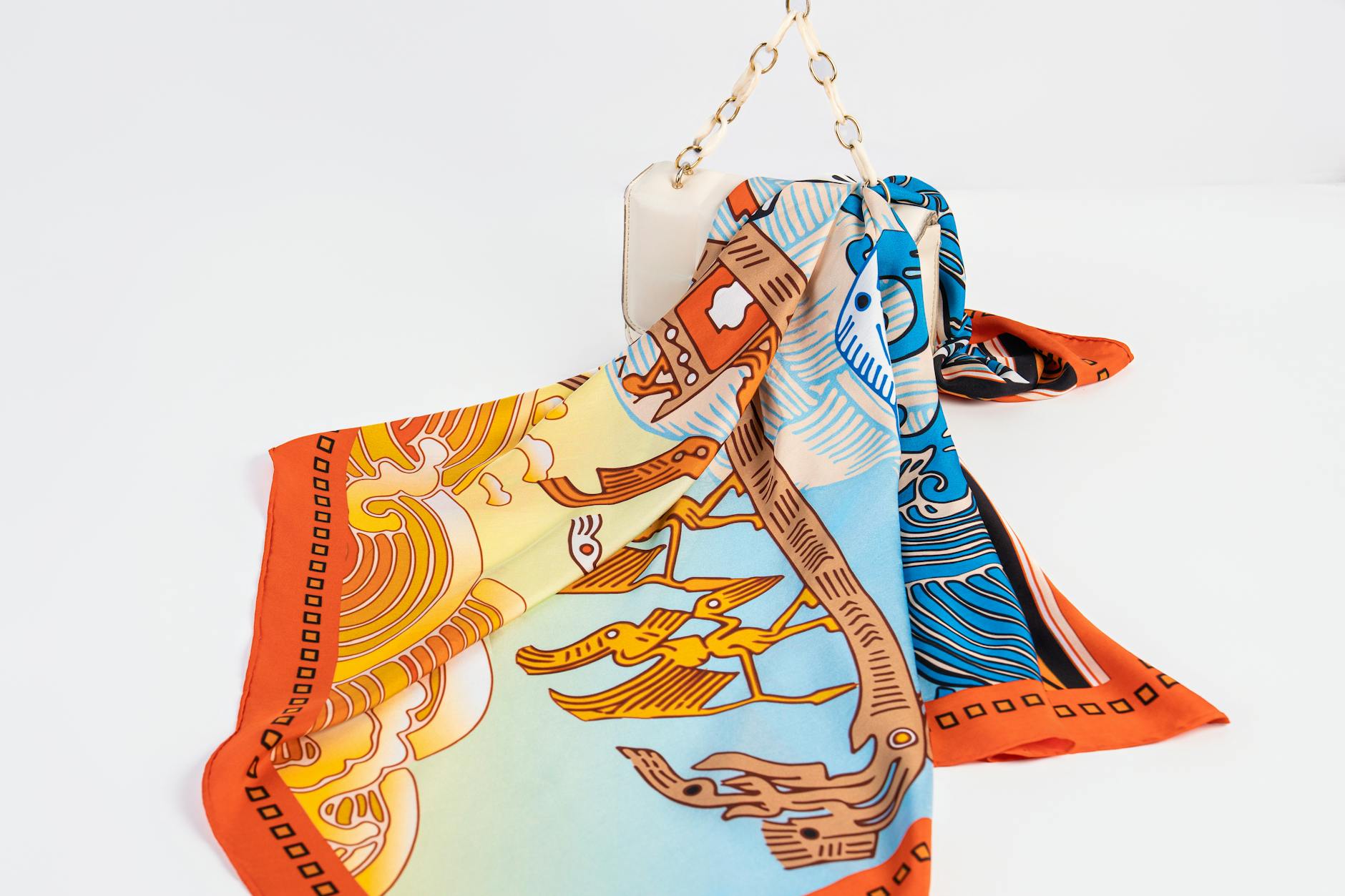
Zoom fatigue meets fashion evolution. While remote workers struggle with screen burnout and endless video calls, an unexpected accessory has emerged as the ultimate power move: the silk scarf. Once relegated to flight attendants and grandmothers’ wardrobes, silk scarves are now commanding boardroom respect through laptop screens, with sales jumping 340% among working professionals since 2022.
The transformation speaks to a broader shift in workplace fashion psychology. Remote workers discovered that the right accessory positioned perfectly within their camera frame carries more visual weight than an entire outfit. A strategically draped Hermès scarf or vintage Pucci print signals sophistication in ways that blazers simply cannot match on screen.
The Camera Frame Effect
Video conferencing fundamentally changed how we present ourselves professionally. The typical webcam captures from chest up, making accessories around the face and neck disproportionately important. Fashion consultant Sarah Chen, who works with Fortune 500 executives, reports that 70% of her remote worker clients now invest more in statement scarves than traditional work clothing.
“The scarf creates this beautiful frame around the face that photographs incredibly well,” Chen explains. “It adds color, texture, and movement that flat blazers just can’t achieve on camera.”
Tech executive Maria Rodriguez discovered this accidentally during a crucial investor meeting. Her hastily thrown-on vintage Chanel scarf became the talking point, with multiple investors commenting on her “sophisticated European style.” The deal closed, and Rodriguez never attended another virtual meeting without a carefully chosen scarf.
The psychology runs deeper than aesthetics. Luxury scarves carry cultural signaling that transcends language barriers – crucial for international video calls. A Burberry check or Louis Vuitton monogram communicates affluence and taste instantly, while expensive suits often look indistinguishable through webcams.
The Luxury Scarf Market Boom
Hermès reported record scarf sales in 2023, with their iconic silk squares commanding waitlists comparable to their famous Birkin bags. The brand’s creative director Pierre-Alexis Dumas credits remote work culture for introducing scarves to younger demographics who previously viewed them as outdated.
Contemporary designers are capitalizing on this trend. Gabriela Hearst’s geometric silk scarves sell out within hours of release, while smaller brands like Rockins and Olivia Dar have built entire businesses around statement scarves for the remote workforce. Even fast fashion retailers like Zara and Mango have expanded their scarf collections dramatically.
The investment angle attracts practical professionals. Quality silk scarves hold value better than most fashion items, with vintage pieces from Pucci, Gucci, and Saint Laurent appreciating annually. Unlike cashmere hoodies replacing blazers in tech culture, scarves offer versatility that extends beyond remote work into travel and evening wear.
Resale platforms like The RealReal and Vestiaire Collective report silk scarves as among their fastest-moving categories. Authentication services have emerged specifically for high-end scarves, as counterfeits flood the market to meet surging demand.
Styling Strategies for Screen Success
Professional stylists have developed specific techniques for scarf presentation on video calls. The “power drape” – where one end falls gracefully over the shoulder while the other creates volume near the collar – appears most frequently in C-suite meetings. This asymmetrical approach adds visual interest without overwhelming the frame.
Color psychology plays a crucial role. Deep jewel tones like emerald and sapphire convey authority, while softer pastels suggest approachability. Patterns require careful consideration – small prints often blur on camera, while bold geometrics maintain clarity across various video platforms.
The timing of scarf reveals has become an art form. Executive coach David Park teaches clients to adjust their scarves during natural conversation pauses, creating subtle moments of elegance that reinforce their personal brand. The movement draws positive attention without appearing contrived.
Lighting considerations have spawned an entire sub-industry. Ring lights designed specifically to complement silk’s natural sheen now sell alongside traditional photography equipment. Professional remote workers invest in multiple light sources to ensure their scarves photograph consistently across different times of day.
Beyond the Screen: Cultural Impact
The silk scarf revolution extends beyond individual styling choices into broader workplace culture. Companies are updating dress codes to accommodate “camera-ready” attire that prioritizes upper-body accessories over traditional suits. Some tech firms now offer scarf allowances as part of remote work stipends.

Generational attitudes toward professional dress are shifting rapidly. Gen Z workers, who might have dismissed scarves as old-fashioned, now view them as essential tools for career advancement. Fashion schools report increased enrollment in accessory design programs, with many students citing remote work influence on their career choices.
The trend has influenced retail real estate as well. Scarf boutiques are opening in suburban areas where remote workers live, rather than traditional downtown business districts. Pop-up events in residential neighborhoods often sell out completely, suggesting this market has significant room for growth.
International fashion weeks now feature dedicated remote work fashion segments, with designers showcasing collections specifically for video conferencing. Milan Fashion Week 2024 included a “Digital Presence” category where models were judged solely on their appearance through webcams.
The silk scarf’s ascension from vintage accessory to power symbol reflects how remote work continues reshaping professional culture. As hybrid work models become permanent fixtures, the accessories that help us command respect through screens will only grow in importance. Fashion industry insiders predict scarves are just the beginning – expect jewelry, eyewear, and even strategic background styling to evolve into essential professional tools.
Frequently Asked Questions
Why are silk scarves popular with remote workers?
Silk scarves create an elegant frame around the face that photographs beautifully on video calls, signaling sophistication better than traditional work clothing.
What scarf styles work best for video conferencing?
The “power drape” with asymmetrical styling and jewel tones or bold geometric patterns that maintain clarity on camera work best for professional video calls.