




A Nation’s Wardrobe, Written in Women
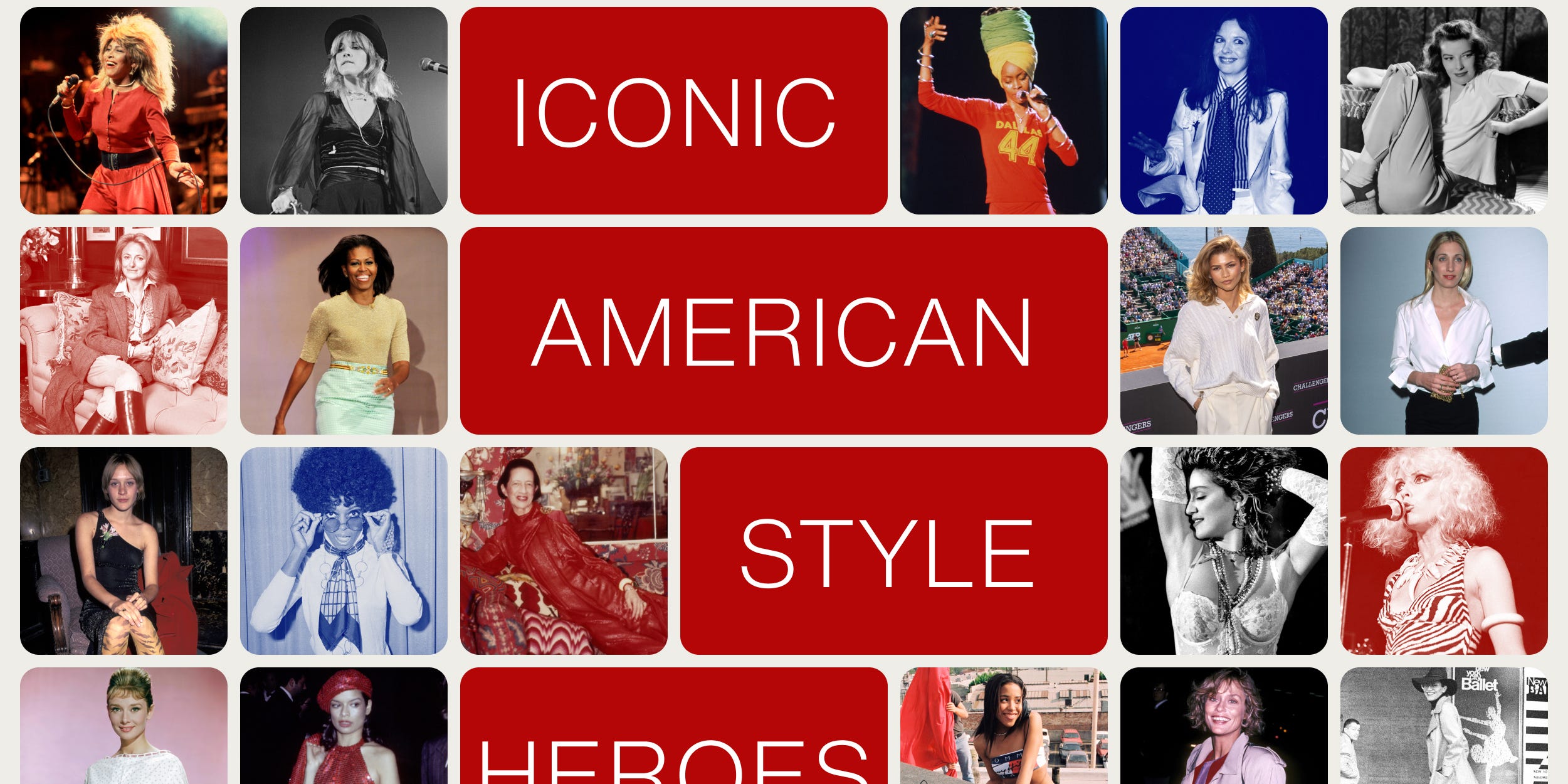
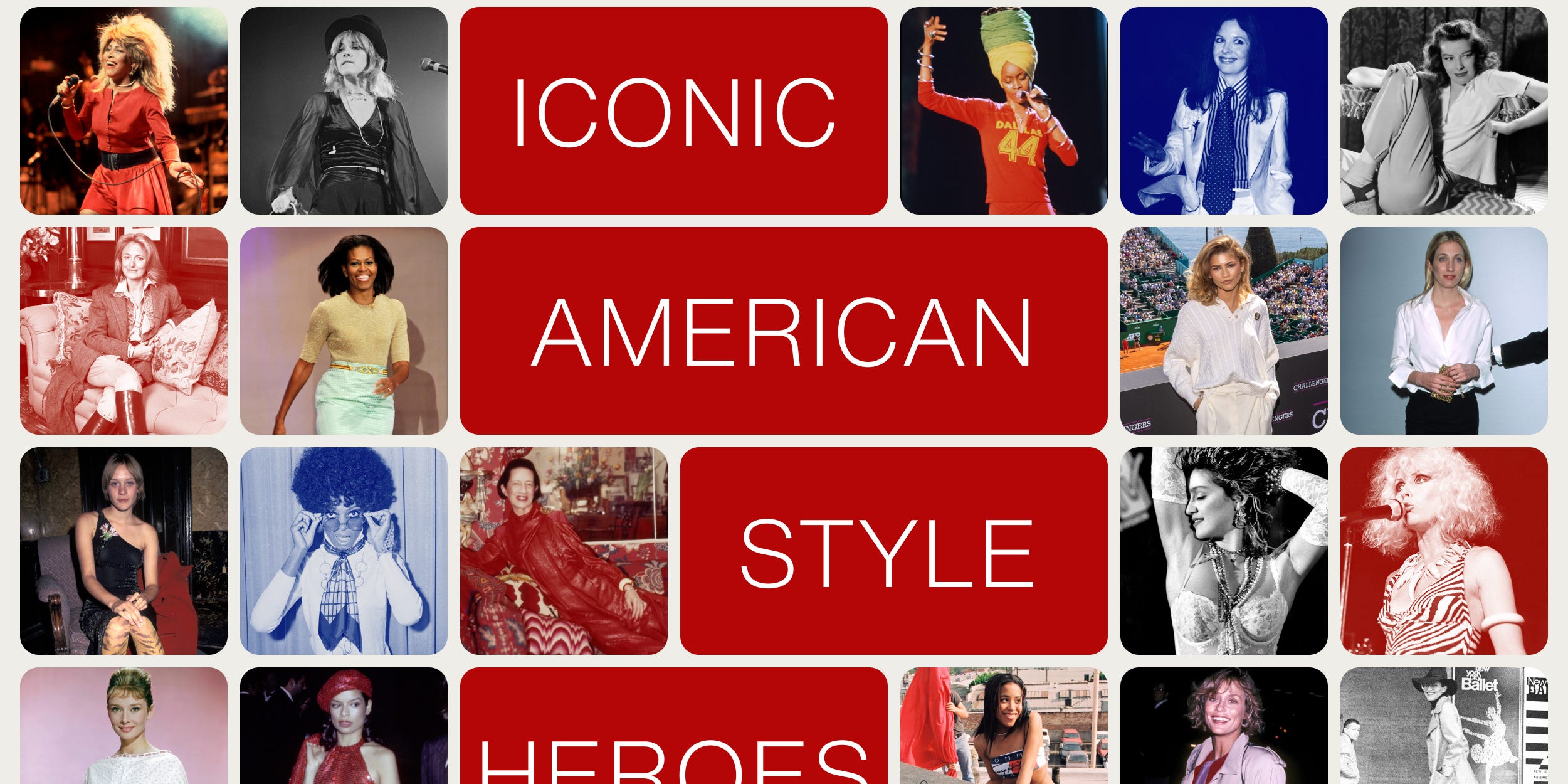
American style has never belonged to one era, one tax bracket, or one definition of beauty. It has been pulled in competing directions by a First Lady who dressed like European royalty and a rapper who wore a pastie as evening wear – and somehow both moves landed in the same national conversation about what it means to get dressed here. Harper’s Bazaar recently catalogued the 50 women it considers the most iconic American style heroes, a list that runs from Jacqueline Kennedy Onassis to Lil’ Kim to the Olsen twins, and the breadth of that range is itself the argument.
What binds these women is not a shared aesthetic but a shared effect: each one changed the terms of what was considered desirable, acceptable, or worth copying. Some did it through access to couture, others through sheer force of personality applied to whatever they could afford or find. The list is less a hall of fame than a map of how American fashion actually moves – not from the top down, but from every direction at once.
The Blueprint Builders
Jacqueline Kennedy Onassis sits at the foundation of any serious conversation about American style influence. Her choices during her years in the White House – the pillbox hats, the Oleg Cassini suits, the restrained palette – did not just define an administration’s visual identity. They created a template for feminine authority through dress that designers and public figures have returned to for six decades. The equation she established, that elegance could be a form of political communication, remains in active use.
But the blueprint builders are not all from the same world. The Olsen twins, Mary-Kate and Ashley, constructed a different kind of influence from a different kind of platform. Starting as child actresses and growing into designers behind The Row and Elizabeth and James, they developed a personal style – layered, oversized, often deliberately disheveled – that became its own school of thought. The aesthetic they refined through their twenties, mixing vintage fur with coffee cups and sunglasses too large for their faces, was picked up by an entire generation that had grown up watching them on television and wanted to follow them somewhere more interesting.
Disruption Was the Point
Lil’ Kim’s place on this list is not a concession to inclusivity – it is a factual acknowledgment of impact. Her appearance at the 1999 MTV Video Music Awards in a purple jumpsuit that left one breast covered only by a matching pastie, with Diana Ross famously cupping that breast on live television, is one of the most documented moments of fashion provocation in American pop culture history. She was making a claim about Black women’s bodily autonomy and sexual self-expression at a moment when mainstream fashion preferred those subjects handled carefully, if at all.
The disruption that earns a place on a list like this operates differently from mere shock value. What separates the women on this roster from those who simply caused controversy is that their choices generated imitation. Lil’ Kim’s influence runs directly into what Nicki Minaj and Cardi B do with fashion today – the understanding that a rapper’s visual presentation is as much a part of the art as the music, and that maximalism is a complete aesthetic position rather than a failure of restraint.
Diana Ross herself belongs on the list as both participant and institution. Her transition from the controlled glamour of Motown’s early years – when Berry Gordy ran a literal finishing school for his artists – to the full-volume sequined spectacle of her solo career tracks the larger story of Black women in American entertainment claiming the right to take up space. The clothes got bigger as the freedom got broader, and that correlation was not accidental.
Bianca Jagger in the 1970s brought a different kind of disruption: the white suit she wore to her wedding to Mick Jagger in 1971, and the general approach to fashion she practiced throughout that decade, collapsed the distance between rock world decadence and high fashion in ways that were not entirely welcome to either camp. She rode a white horse into Studio 54. The fashion world eventually caught up to what she was doing.
The Quiet Architects
Not every woman on the list announced herself. Some reshaped American style through accumulation rather than event. Grace Kelly’s influence operated on a long delay – her work in Hollywood in the early 1950s established a vision of blonde, patrician American beauty that the fashion industry spent the rest of the century alternately selling and reacting against. When she became Princess of Monaco in 1956 and the Hermès bag she used to shield her pregnancy from photographers was renamed the Kelly bag in her honor, the distance between Hollywood and European royalty collapsed into a single leather handle.
The quieter architects often did their most lasting work through repetition. Carolyn Bessette-Kennedy, who married John F. Kennedy Jr. in 1996, had no public platform beyond her marriage and her background working in Calvin Klein’s PR department. What she had was a consistent, stripped-down approach to dressing – minimal jewelry, neutral colors, clothes that fit with precision – that the internet has been reverse-engineering for twenty-five years. She did not give interviews about her style. She simply had it.
What the List Actually Argues
A ranking of 50 women who shaped American fashion is, by definition, a series of arguments rather than facts. The choice to place Jacqueline Kennedy Onassis alongside Lil’ Kim is itself a position: that American style is not a hierarchy with European-influenced refinement at the top and street culture below it, but a genuinely plural system where a purple pastie and a Givenchy sheath can both be described as iconic without irony. That argument is worth making explicitly, because the fashion industry has not always believed it.
The Olsen twins’ inclusion points toward something the list does well – acknowledging that influence can travel through retail and popular culture as effectively as through runway shows. Mary-Kate and Ashley built an empire before they built a critical reputation, and the high-low vocabulary they developed is now so embedded in how American women dress that it barely registers as a choice. That is the test a style hero actually has to pass: not whether their look was photographed, but whether people started dressing differently because of it.
What remains unresolved is the question of who gets remembered and who gets edited out. Lists like this are corrective by design – Harper’s Bazaar is actively choosing to include women whose influence ran through hip-hop or through tabloid culture rather than through traditional fashion coverage. But the 50 slots impose their own limits. For every Lil’ Kim on the list, there are figures from country music, from Latino pop, from the ballroom scene that gave mainstream fashion voguing and a vocabulary of realness, who do not appear. The women who did make it shaped what we wear. The women who didn’t may have shaped it just as much, just with fewer people watching.
Carolyn Bessette-Kennedy never gave a single interview about her clothes. She has been searched, pinned, and recreated online more consistently than almost anyone on this list. What does it mean that the most imitated American style of the last quarter century belongs to a woman who never tried to have one?