




A Childhood Door That Stayed Shut
For years, the summer camp fantasy lived only on screen – in VHS rewatches of The Parent Trap and It Takes Two, where cabin wars and shaving cream pranks made childhood look like one long, glorious adventure someone else got to have.
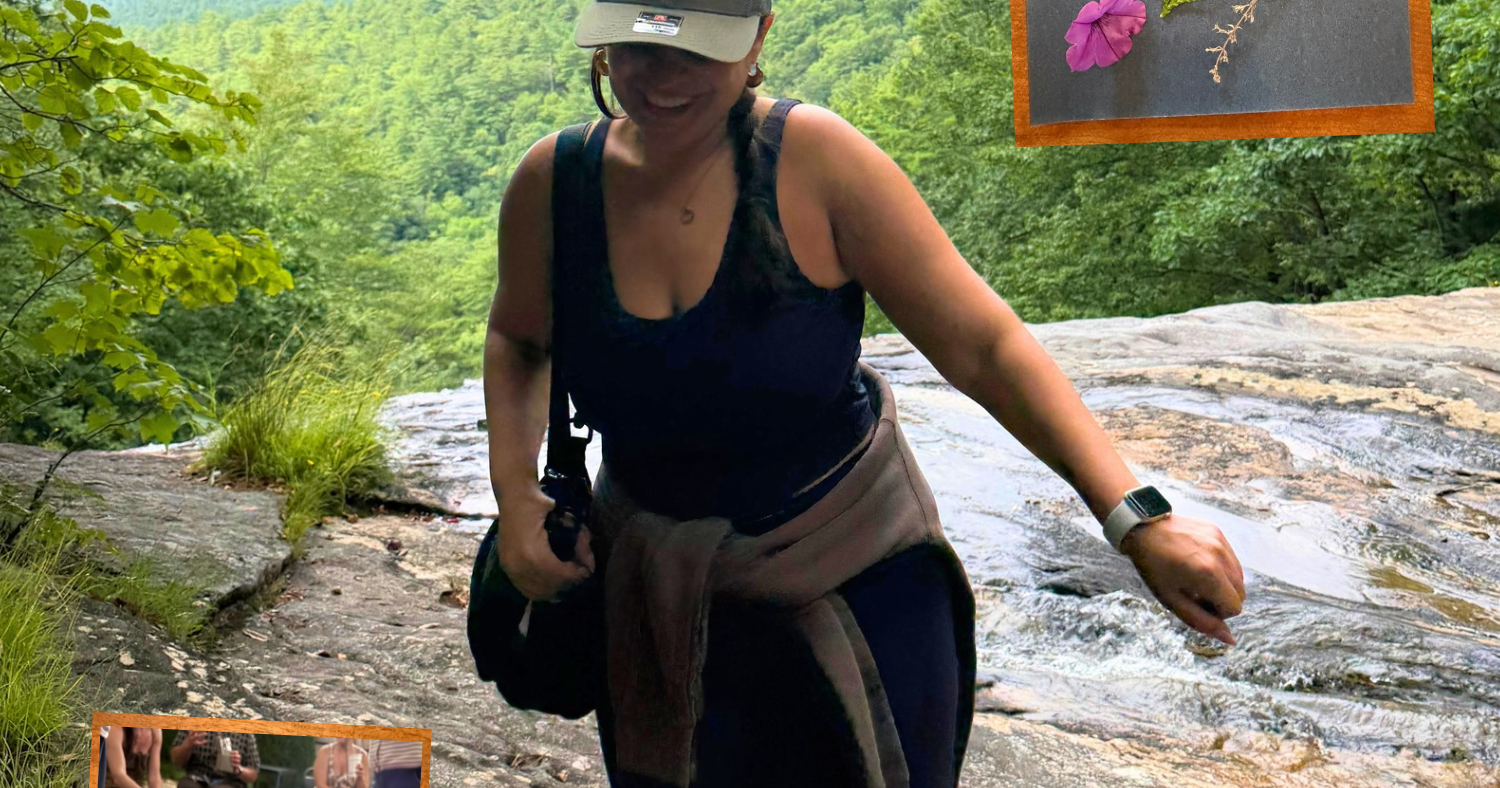
Raquel Reichard grew up watching those ’90s films alongside her Puerto Rican mother, both of them laughing at the identical characters fooling the adults around them. But when Reichard begged to be signed up for a camp of her own – to play tug-of-war, toast marshmallows, whisper under covers with a cabin full of girlfriends – her mother’s answer was always the same three words: “No, hay hombres.” No. There are men there. Men she didn’t know, men she couldn’t shield her daughter from across miles of distance. The same logic closed the door on sleepovers at friends’ houses, too.
It wasn’t an arbitrary fear. Research published in 2025 in the peer-reviewed Trauma, Violence, & Abuse Journal found that 3.7% of surveyed adults report experiencing child sexual abuse in youth service organizations – a category that includes summer camps, sports clubs, and religious organizations. Looking back now, with that data in hand and headlines she’s read as an adult and an aunt, Reichard says she understands and agrees with her mother’s decision.
Understanding the past, though, doesn’t silence the part of her that never got to go. That inner child – the one who pressed her face against the metaphorical cabin window for decades – was still waiting. And in her 30s, Reichard finally had something she didn’t have at eight years old: the agency to decide for herself.
Camp, Curated, at 30-Something
In July, Reichard signed up for Camp Elevate, an adult camp experience created by Chase and Marriott Bonvoy to showcase the benefits of the Marriott Bonvoy Boundless® Credit Card. The camp was staged at Trailborn, giving participants a version of the summer camp experience that had been off-limits in childhood – but with the particular texture of adult life folded in.

Adult camps have been quietly building a following for years, operating on a straightforward premise: the things that made childhood summers feel expansive – unstructured time outdoors, group meals, activities with strangers who become friends by nightfall – don’t lose their appeal just because you’re paying a mortgage. If anything, they become harder to access and therefore more attractive. The camp format strips away the performance of adult socializing and replaces it with the kind of low-stakes interaction that a ropes course or a campfire tends to produce naturally.
Camp Elevate leaned into that logic. The Marriott Bonvoy Boundless® Credit Card partnership gave the experience a clear commercial frame, but the emotional pitch was simpler: here is the thing you missed, and here is how to have it now. For Reichard, that offer landed with unusual weight. This wasn’t a wellness retreat or a branded influencer trip she could hold at arm’s length. It was a direct answer to something specific her childhood didn’t include.
The camp model also carries a particular resonance for women who grew up in households where the threat calculus around unsupervised time was explicit and ever-present. Reichard’s mother wasn’t unusual in that calculation – she was working from a real and documented risk, applied with the limited information and geographic distance any parent faces when deciding whether to send a child somewhere they cannot follow. The result was protection that worked, and a gap that didn’t close until Reichard closed it herself, decades later.
What’s notable about the adult camp format is how directly it addresses the experiential debt some people carry out of childhood – not the grand deficits, but the small, specific ones. The marshmallow. The cabin prank. The friend you’d only see for two weeks a year and then miss for the other fifty. Those losses are minor by most measures, but they have a way of surfacing when the conditions are right, which is exactly what the Camp Elevate experience was designed to produce.
Reichard describes signing up as treating “Baby Quels” – a shorthand for the version of herself that didn’t get the thing the first time around. It’s a framing that sounds light but carries something more specific underneath: the idea that some childhood experiences are so emotionally coherent that they remain available to be completed later, by an adult who was once a child who asked and was told no.
Who Summer Camp Was Always For
The adult camp market has expanded precisely because that feeling – the sense of a missed experience still available to be claimed – turns out to be widely shared. Branded camp activations, like the one Chase and Marriott Bonvoy built around the Boundless® Credit Card, are betting that nostalgia is a strong enough pull to move a loyalty product. But for participants who carry actual histories of exclusion from the camp experience, the transaction means something more layered than a credit card pitch.

Reichard’s account raises a question that the adult camp industry doesn’t often address directly: who was summer camp always for, and what does it mean to arrive there late? The activities – tug-of-war, toasted marshmallows, the low-stakes closeness of shared outdoor time – were never complicated. The access was. And for a woman whose Puerto Rican mother said “no, hay hombres” on every occasion the question came up, Camp Elevate in July wasn’t just a brand experience. It was the first time the door opened.